
Spreading softness
Soft tissue that expands is more urgent than an old dry mark.
Troubleshoot common orchid problems by checking symptom location, pot moisture, roots and recent conditions before choosing a remedy.
The same symptom can come from different causes. Begin with location, moisture and root condition, then choose the next check instead of jumping to a treatment.
Separate normal loss of an older lower leaf from broader yellowing that needs a closer look.
Open guide →Identify soft, hollow or collapsing roots and correct the wet root environment that allowed damage.
Open guide →Tell ordinary end-of-bloom flower loss from unopened buds dropping after stress or environmental change.
Open guide →Decide whether the plant is truly dry or unable to take up water because roots are damaged in a wet pot.
Open guide →A wrinkled leaf can come from a dry pot or from damaged roots in wet medium. If the pot is dry and roots are firm, water may be lacking. If the pot is wet and roots are soft, adding more water can make the problem worse. Yellow leaves also need context: one aging lower leaf is different from several leaves changing quickly.
Flower loss needs the same distinction. Open flowers eventually age and fall. Unopened buds dropping early point to a different event and can follow sudden temperature change, drafts, root stress or other disruption. Start with what changed and what the roots look like.
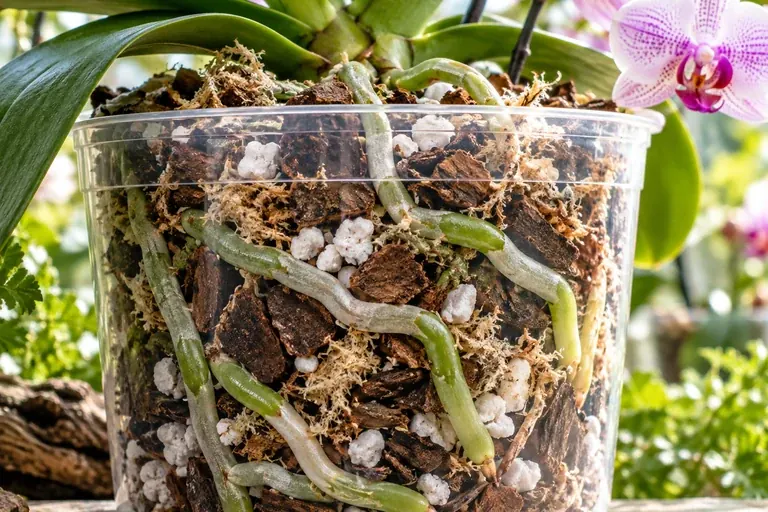
Leaves lose firmness when water is not reaching them, but the reason can be opposite conditions. A genuinely dry plant with functioning roots may need water. A plant sitting in wet, degraded medium can also wrinkle because damaged roots are no longer absorbing effectively.
Lift the inner pot, feel or inspect the medium and look at root texture. Firm roots are more reassuring than a single color. Soft, hollow, mushy or collapsing sections are signs that the root system needs attention.
Do not respond to a stressed plant by adding fertilizer or making several environmental changes at once. Empty trapped water, inspect failing roots or remove a heat source when you find it. Follow changes in the newest leaves and roots.
Match the symptom with the first check and next step; appearance alone is not a diagnosis.
| Symptom | Check first | Next step |
|---|---|---|
| One lower leaf slowly yellowing | Is the rest of the plant stable with healthy roots and new growth? | Monitor; an older leaf can senesce naturally. |
| Several leaves yellowing | Root condition, light change, temperature stress and how wet the pot remains. | Correct the cause you confirm; treating leaf color by itself does nothing. |
| Wrinkled leaves + dry pot | Root firmness and whether the medium has become difficult to rewet. | Water thoroughly if roots are functioning, then reassess drying. |
| Wrinkled leaves + wet pot | Look for soft, hollow or collapsing roots and stale medium. | Address the root environment; do not keep adding water. |
| Unopened buds dropping | Recent drafts, temperature swings, moves, root stress or sudden environmental change. | Stabilize conditions and protect developing buds from abrupt changes. |
Some changes justify checking the roots or crown promptly instead of waiting weeks.
Soft tissue that expands is more urgent than an old dry mark.
A pot that stays wet while leaves lose firmness needs a root check.
Water or soft tissue in the crown deserves prompt attention.
Several leaves changing quickly is different from one old lower leaf.
Cold drafts, heat and abrupt moves can compound root stress.
Similar symptoms can have opposite causes. Separating those look-alikes prevents the most common overreactions.
One older lower leaf slowly yellowing on an otherwise stable plant can be normal aging. Several leaves changing quickly, yellowing paired with soft roots, or a declining crown deserves a different level of attention. Location and speed matter.
Wrinkled leaves show that water is not reaching the leaves adequately, but the reason may be a dry pot or damaged roots in a wet pot. Check moisture and root texture before adding water. The wrong response can intensify the problem.
Old roots can be stained by bark or fertilizer salts and still be firm. Living root tissue is better judged by firmness and integrity than by color alone. Hollow, mushy or collapsing roots are much stronger evidence of damage.
Open flowers naturally age and fall. Unopened buds dropping early suggest a disturbance during bud development and should prompt a check for sudden temperature changes, drafts, moves, root stress or other recent environmental shifts.
Moisture, root texture and the speed of change usually tell you more than a single leaf or flower does.