
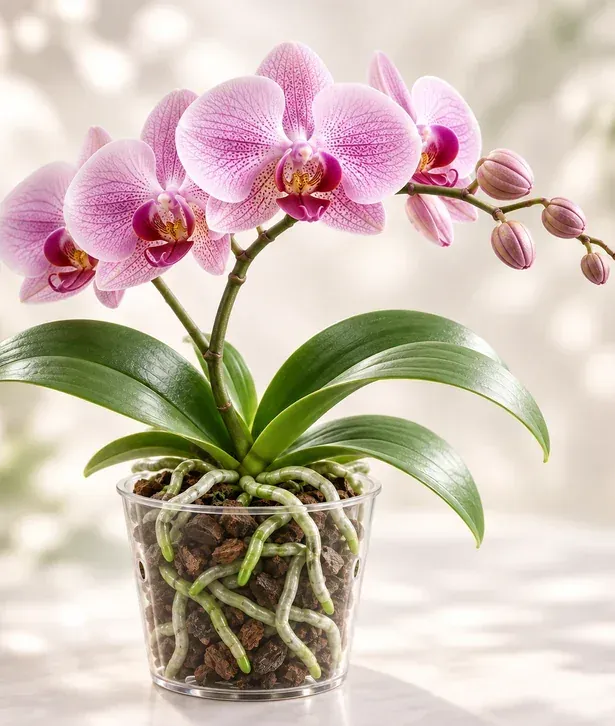
Flowers or unopened buds?
More than one problem can occur at once. For example, a newly transported orchid may also be sitting in wet mix.
| Pattern | First check | Next step |
|---|---|---|
|
Older flowers fade gradually; plant remains firm
|
Age of the display and condition of roots and leaves
|
Continue care and plan for the period after flowering.
|
|
Several open flowers wilt after a move
|
Transport, heat, cold, drafts and moisture changes
|
Stabilize conditions and inspect the roots and mix.
|
|
Unopened buds yellow, dry or drop
|
Recent environmental stress, roots and pests
|
Remove any immediate draft or heat source, then inspect the pot and remaining buds.
|
|
Flowers are scarred or distorted, with visible insects
|
Pest activity
|
Isolate and identify before treatment.
|
|
Flower loss accompanies a collapsing crown or leaves
|
The health of the whole plant
|
Treat the plant problem first; the flowers are secondary.
|
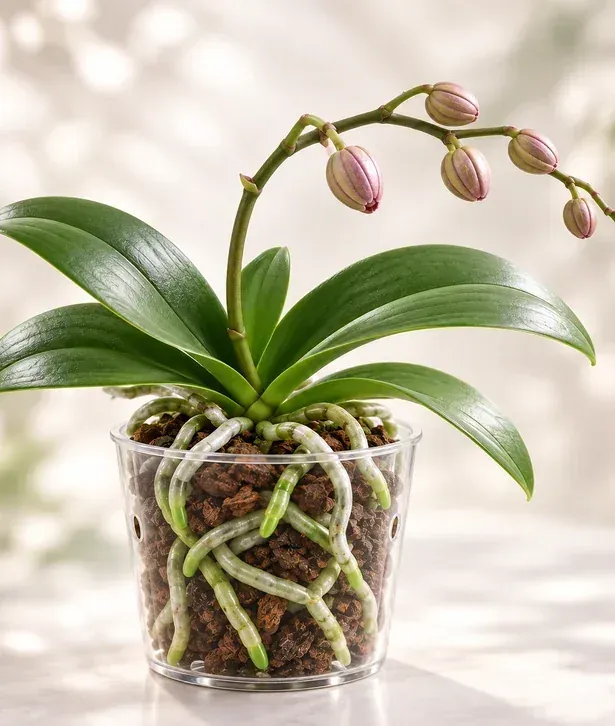
What changed recently?
Think back to the days before the buds began failing. Was the orchid taken through cold weather, left in a hot vehicle, moved beside a heating vent or shifted from a bright store into a dim corner?
Buds are sensitive to unsuitable conditions and abrupt changes. A flower that falls today may be reacting to an exposure from several days earlier.
Choose a stable position with appropriate filtered light. Keep the plant away from direct hot or cold air, and do not leave leaves or buds against window glass. Avoid repeatedly moving it around the home in search of an instant improvement.
Check moisture first
Buds can lose their water supply when the mix is too dry or when roots are damaged in a wet pot. Lift the growing pot out of its cover, empty runoff and check the center of the mix.
If roots are firm and the mix is approaching dryness, water thoroughly and drain. If the pot is heavy and wet and roots are soft, inspect for root damage. Flower loss alone does not tell you whether to water.
Avoid misting buds as a rescue method. Water sitting on sensitive tissues can create additional problems, and a quick spray cannot restore the function of impaired roots.
Look closely for pests
Check flowers, buds, leaf undersides and leaf joints. Distorted flowers, visible insects or sticky residue can justify closer inspection. Keep the plant separate from others while identifying the issue.
Do not apply several products in succession merely because the buds are falling. Chemical injury can also damage flowers and buds. Choose a treatment only after identifying the target, and follow a label appropriate to the plant and use.
A magnifying glass and clear photographs are useful. Tiny marks alone may not be enough to distinguish insect feeding from handling or environmental damage.
Fruit, fumes and drafts
Ethylene from ripening fruit and other environmental exposures can shorten flower life or affect buds. Keep a flowering orchid away from a concentrated source of ripening fruit, smoke and chemical fumes.
An ordinary fruit bowl across a large, well-ventilated room does not explain every lost bloom. Consider distance, ventilation and the rest of the plant before treating fruit as the cause.
If you suspect a household gas leak, treat it as a home safety issue first; the orchid is secondary.
Can a damaged bud recover?
A bud that is already dead will not return to normal development. Focus on protecting the healthy remaining buds and the plant. Remove fallen material so it does not accumulate in the crown or on wet medium.
Do not cut off an entire green spike just because one bud failed. Check whether the rest remains healthy. Likewise, do not assume a spike must remain indefinitely if the plant is weak and recovery is the priority.
Once the display has ended normally, use care after blooming to decide whether to leave, shorten or remove a green spike.
Keep the routine steady
Do not repot a stable flowering orchid, move it into stronger sun and increase fertilizer on the same day to stop flower loss. Each change makes the original cause harder to understand.
Serious root damage may require repotting even while the plant is flowering. Normal flower aging does not. Healthy roots and steady conditions matter more than keeping every old flower.
Check the rest of the plant
Watch whether healthy buds continue developing, new damage stops and leaves remain firm. A display may still shorten after an earlier stress even when the current care is appropriate.
Record the pattern, not just the number of flowers lost. “Two oldest flowers faded over a week” is more informative than “my orchid is dying.” Strong roots and healthy new growth give the plant the best chance of another display; when it is ready for another cycle, review reblooming conditions.
Common questions
Does flower loss mean my orchid is dead?
No. Flowers are temporary. Check the crown, leaves and roots to judge the plant’s health, and distinguish gradual fading from sudden stress-related loss.
Why are unopened orchid buds falling off?
This is commonly called bud blast. Temperature changes, water stress, damaged roots, pests and other environmental factors can contribute. Check what changed before settling on one cause.
Should I repot as soon as flowers fall?
Only when the roots, medium or pot give you a reason. After flowering can be convenient for routine repotting, but normal flower loss does not by itself prove that repotting is needed.
More Orchid Care Guides
Why Orchid Leaves Turn Yellow
Separate an aging bottom leaf from water, root or light problems. Find out when yellowing needs prompt attention.
Read the guide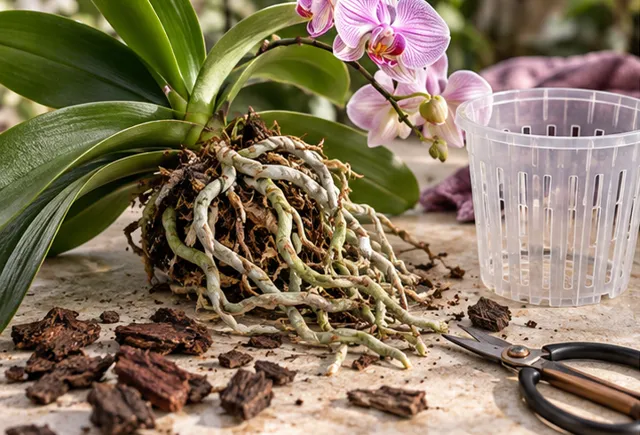
Orchid Root Rot
Inspect soft roots, preserve healthy tissue and repot a struggling orchid without making the damage worse.
Read the guide