
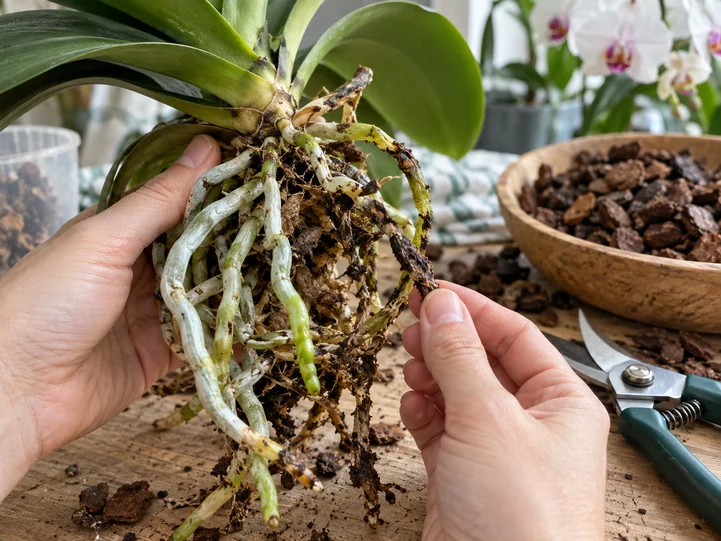
Check texture, not color
Look for structural changes: roots that are soft, hollow, flattened or losing their outer covering. A firm root stained by bark is not equivalent to a mushy root. Roots inside a dark pot may be pale or yellowish and still function.
Leaf wilting supports the need for a check but does not establish the cause. Underwatering, heat, recent repotting and pests can also change leaf firmness. Inspect the mix and roots before choosing a treatment.
If only one old exposed root is dry while the rest of the plant is stable, avoid turning a minor issue into a major repot. Widespread deterioration is different.
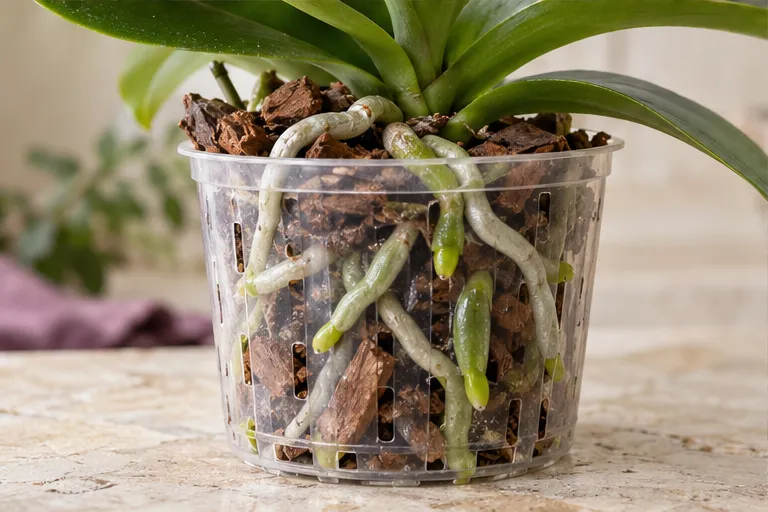
Firm, intact root
Keep it. The outer covering holds its shape. A root may be silver, green, pale or stained brown and still be alive.
Collapsed outer tissue
Inspect the damaged section. Soft or hollow tissue may detach and leave a thin central strand. Remove clearly dead tissue, not every discolored root.
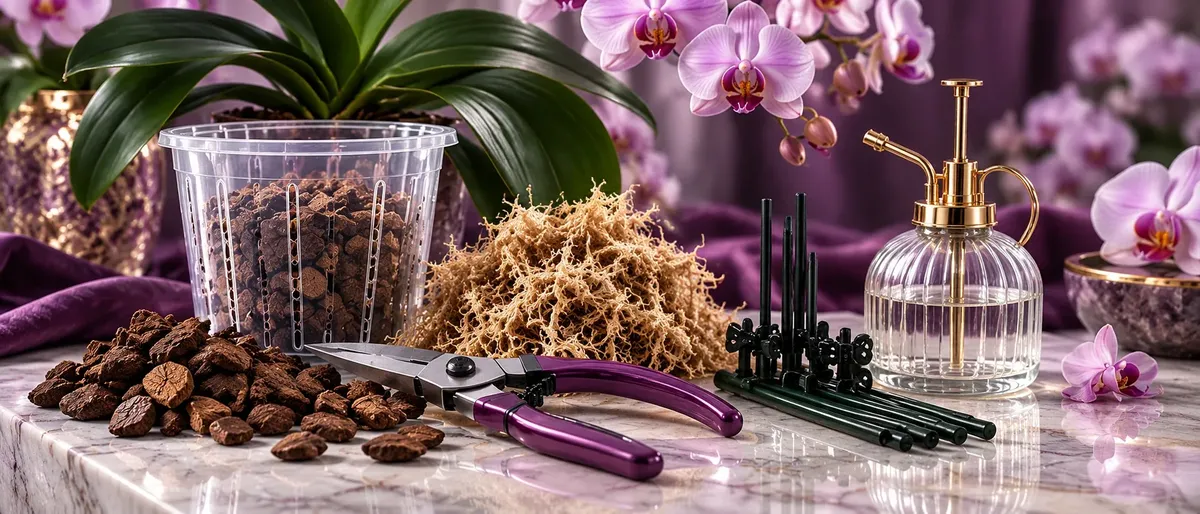
Prepare a clean workspace
Keep a struggling plant away from the collection while investigating a possible disease problem. Use a clean tray and avoid sharing runoff or a soaking container. Prepare fresh appropriate medium, a fitting pot and clean, sharp tools before unpotting.
Remove visible debris before disinfecting tools, and follow the disinfectant's directions. Do not assume every quick wipe kills every orchid pathogen. Keep tools used on compromised tissue away from healthy plants until properly cleaned.
Unpot and inspect
Ease the plant out without pulling leaves or the flower spike. Remove loose old medium and carefully separate compact material near the base. A wet central plug may be hidden by dry bark at the edges.
Inspect the whole root system and photograph it before trimming. Keep a second photo of the remaining roots to compare with later growth.
Keep every firm root
Trim tissue that is clearly dead, hollow or mushy. Keep firm roots, including awkward, pale or stained ones. Do not prune the system into a symmetrical shape or cut roots merely because they are outside the old pot.
Recovery depends on the growing point and the healthy tissue that remains, not on a photograph or a simple root count.
| Finding | Response |
|---|---|
|
Firm root with a discolored surface
|
Keep and monitor unless other evidence shows the tissue is failing.
|
|
Root that collapses or sheds rotten outer tissue
|
Remove clearly dead material with a clean tool.
|
|
Several healthy roots remain
|
Repot to fit those roots and support the plant while it establishes.
|
|
Very few roots remain but the crown is firm
|
Recovery may be possible, but moisture control and stability are critical.
|
|
Soft decay has spread into the crown or stem
|
The plant needs closer assessment; routine repotting alone may not address the damage.
|
Fresh mix and a smaller pot
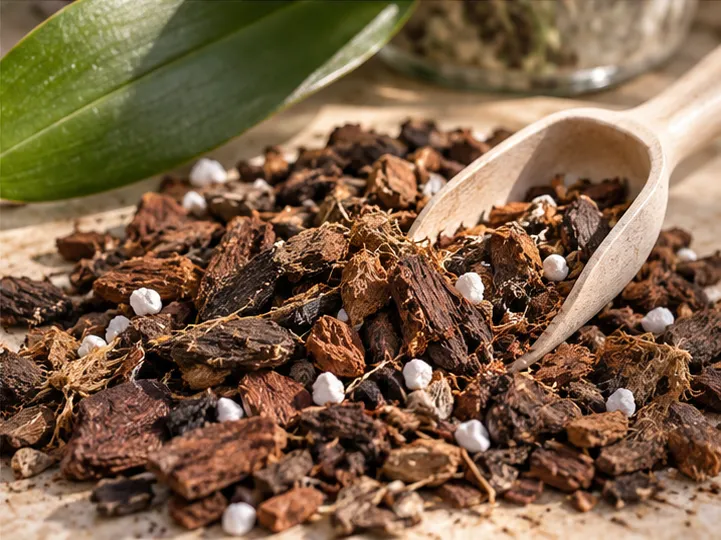
Use fresh suitable medium and a pot matched to the remaining roots. A plant that lost much of its root system may need a smaller container. Extra wet medium does not compensate for missing roots.
Keep the crown above the mix. Support the plant so it does not rock, using a soft tie or suitable support without constricting tissue. Do not pack moss tightly around the stem to hold it upright.
Review why the old system stayed wet: a large pot, blocked drainage, deteriorated mix, a hidden plug, low light or water collecting in a cover pot can all contribute. Correcting only the visible roots leaves the underlying setup unchanged.
Avoid harsh home remedies
Do not routinely bathe healthy roots in peroxide or coat them in household powders because a video recommends it. An unmeasured treatment can damage tissue and does not replace diagnosis, sanitation or suitable potting conditions.
Not every root problem is fungal, and not every fungicide is appropriate for an orchid or the suspected problem. If treatment is needed, use a product labeled for that use and follow its directions. Do not mix household chemicals or pesticides.
Fertilizer is not a root-repair treatment. Keep feeding conservative while the plant is compromised; strong salts can add another stress.
Watering during recovery
Check the center of the new mix before watering. Keep it airy and lightly moist around the remaining roots, never continuously waterlogged. Empty the cover pot after each watering; a smaller root system may use water slowly.
When only a few roots remain, keep the plant supported so fresh tips are not rubbed off by rocking. Use bright filtered light, keep the crown above the mix and postpone fertilizer while roots are badly compromised.
A completely rootless plant needs closer rehabilitation care than a routine repot. Keep the stem and crown out of standing water and avoid a sealed, wet bag. Seek a plant-clinic or experienced orchid-grower assessment if the stem is also soft or the decay continues.
What recovery looks like
A firm crown, stable leaf condition and new root tips matter more than whether old wrinkles disappear. Old leaves may remain marked or be lost even as the plant recovers.
Use photographs every few weeks. Avoid repeatedly unpotting to look for roots; that can damage new tips and reset the disturbance. If decay continues spreading or the center becomes soft, seek a plant-clinic assessment and keep the orchid separate.
Once the roots establish, return to ordinary condition-based watering. A recovery routine should eventually become a stable growing routine, not an endless series of emergency treatments.
Common questions
Can an orchid recover from root rot?
Sometimes. Recovery depends on the roots that remain, the crown and stem, the severity of damage and whether the growing conditions are corrected. Root color or a photograph alone cannot predict the outcome.
Should I use hydrogen peroxide on all the roots?
Do not use an unverified routine chemical bath as a substitute for diagnosis and suitable care. Preserve healthy tissue, use clean tools and obtain appropriate treatment advice when disease is suspected.
Why are the leaves wrinkled if the pot is wet?
Damaged roots may not supply enough water to the leaves. If the mix is already wet, adding more water can make the problem worse.
More Orchid Care Guides
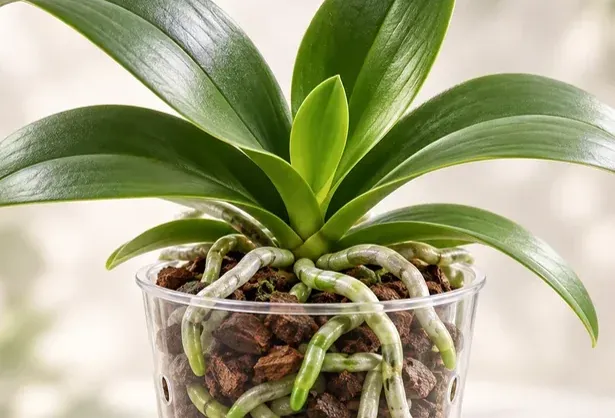
Why Orchid Leaves Turn Yellow
Separate an aging bottom leaf from water, root or light problems. Find out when yellowing needs prompt attention.
Read the guide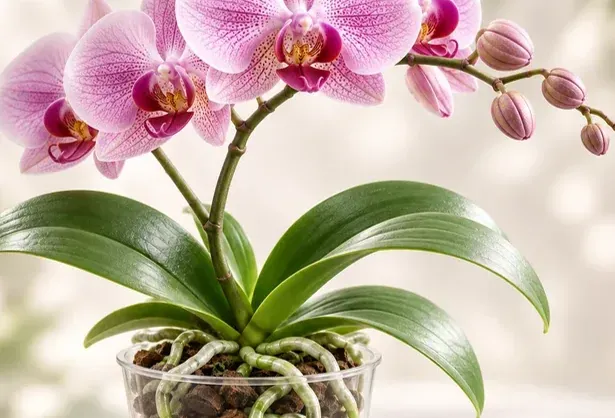
Why Orchid Flowers Fall Off
Tell normal flower aging from bud blast, check recent changes and protect the healthy buds that remain.
Read the guide