
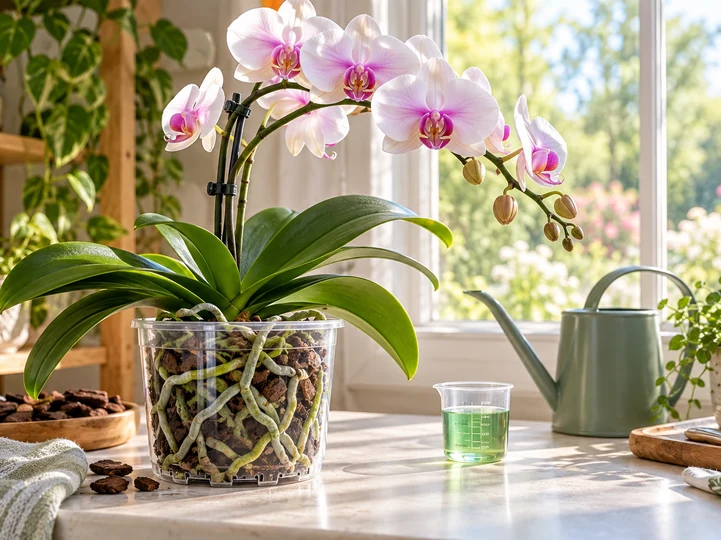
What roots need from a mix
There is no single best orchid mix. Root thickness, orchid type, pot material, room conditions and watering habits all change how quickly the same ingredients dry.
A suitable mix holds enough moisture to support the plant, allows excess water to leave and maintains air spaces around the roots. It also gives the plant support. Ordinary fine-textured potting soil usually does not provide the same structure for a moth orchid.
The size and shape of particles affect the air spaces. So do the way you pack them, the depth of the pot and how the material changes with age. A mix that starts open can become denser as bark decomposes and fine particles accumulate.
Compare the ingredients
A beginner mix does not need every ingredient. Start with a loose bark mix suited to your pot and room, then check how its center dries before adding moisture-retentive components.
| Ingredient | What it does | What to watch |
|---|---|---|
|
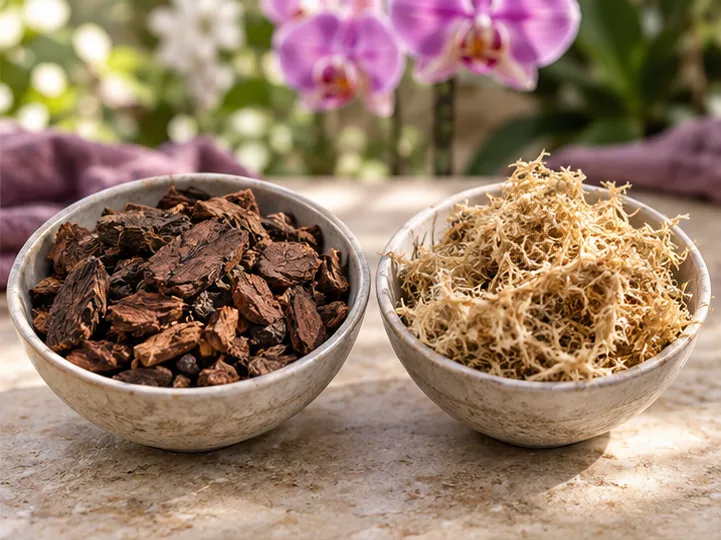
Orchid bark
|
Creates structure and air spaces; often drains readily
|
Fresh bark can be hard to wet; old bark breaks down.
|
|
Long-fiber sphagnum
|
Holds moisture around roots
|
Tight packing or a large wet core can delay drying.
|
|
Coarse perlite or pumice
|
Adds a durable structural component
|
Dust should be handled according to package guidance; the whole blend still needs correct watering.
|
|
Horticultural charcoal
|
A structural component used in some blends
|
It is not a substitute for repotting or a treatment for root disease.
|
|
Coconut husk chips
|
Can provide coarse structure with moisture retention
|
Preparation and salt content vary; use a product intended and prepared for horticulture.
|
|
Expanded clay
|
Durable, reusable structure in selected systems
|
A reservoir-based method is a different watering system, not a direct swap for bark.
|
Choose the bark size
Coarser particles usually leave larger air spaces, while smaller particles hold moisture differently and fit around finer roots. But “small,” “medium” and “large” are not standardized across brands.
Look at the size of the bark pieces and the thickness of the roots. Thick Phalaenopsis roots and the finer roots of many Oncidium hybrids do not create identical potting spaces. Pot material and room conditions still matter: a coarse mix in a very ventilated pot can dry quickly enough to demand frequent attention.
Choose bark that leaves air spaces without drying out faster than you can water. The coarsest grade is not always the best fit.
Match the pot and room
If your existing pot remains wet for a long time, first check whether it is oversized, sitting in runoff or filled with decomposed medium. A new ingredient cannot compensate for those problems.
If a correctly sized pot dries very rapidly in a warm, dry room, a more moisture-retentive blend or a less porous pot may be useful. If the room is cool and the pot dries slowly, a more open structure may be easier to manage.
The bark-versus-moss comparison helps separate a material choice from a watering habit. It also explains why layering unlike materials can hide moisture.
Sphagnum is not potting soil
Long-fiber sphagnum used around orchid roots is not the same product as fine peat-based houseplant compost. They behave differently, even when both are described using the word “moss.” Check the actual material and texture; the word “moss” on a package is not specific enough.
A bag labeled “orchid mix” also deserves a look inside. Different orchids need different media, and some commercial mixtures are finer than a moth orchid grower expects. Confirm that the product is appropriate for the plant and potting method.
Prepare without compacting
Follow the package directions for soaking, rinsing or dust control. Premoistening appropriate bark can make its first watering more even. Wet and loosen compressed long-fiber moss before gently placing it around roots.
Avoid repeated heavy compaction. Tapping the pot can settle particles into useful spaces without crushing them. If the plant is unstable, stake it or clip it in place instead of compacting the mix around the roots.
Do not add garden soil, compost or kitchen scraps to “feed” an epiphytic orchid. Fertilizer is managed separately, at a controlled concentration, using a suitable feeding routine.
When to replace old mix
Inspect how it behaves, not just how old the label says it is. Fine debris, poor drainage, a sour or persistently wet center, substantial deposits and declining roots can signal that the mix is no longer doing its job. Bark and moss age at different rates under different conditions.
Repotting does not always require a larger pot. Fresh medium and a container matched to the roots can be enough. Record the material and the date so that changes in drying time make sense later.
Adjust after a change
Moving from dense moss to coarse bark can change how often you need to check for water. Switching the mix, pot material, light and fertilizer in one day makes the result hard to interpret.
When repotting is necessary, keep the growing environment otherwise steady. Learn the new pot's weight and moisture pattern over several cycles. A mix is working when roots stay healthy and the plant can be watered thoroughly without remaining chronically saturated—not because it matches a popular recipe.
Common questions
Can I use regular potting soil for a moth orchid?
Dense ordinary houseplant soil is generally unsuitable for the roots of potted Phalaenopsis. Use an appropriate orchid medium with structure and drainage.
What is the best orchid mix ratio?
There is no universal ratio. Root type, pot size, ventilation and the room’s drying conditions determine whether a blend is practical.
Is charcoal necessary in every orchid mix?
No. It is one optional component in some blends. It does not make old medium fresh or replace disease management.
More Orchid Care Guides
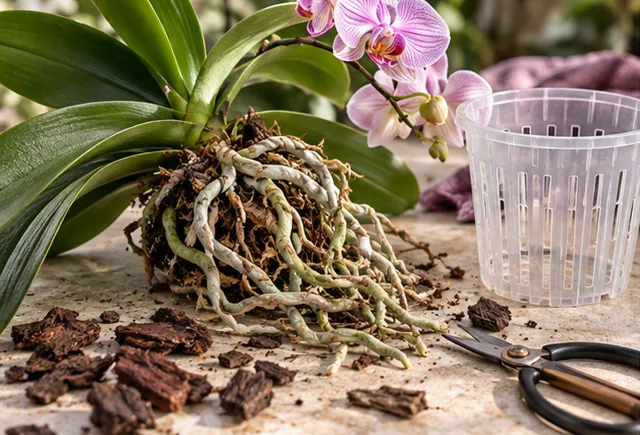
How to Repot an Orchid
Work through pot removal, root checks, fresh mix and aftercare without cutting healthy roots or burying the crown.
Read the guide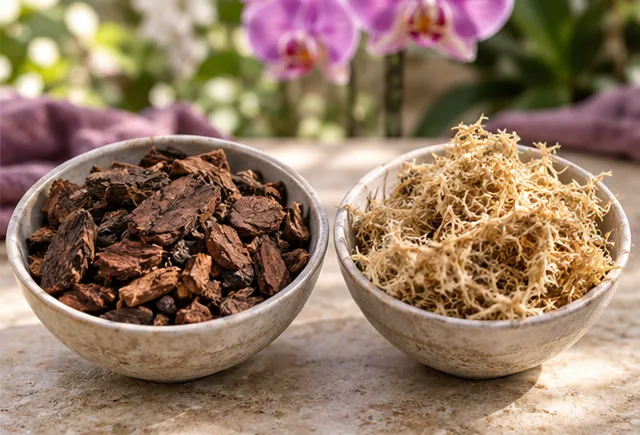
Orchid Bark vs. Sphagnum Moss
Compare drying patterns, deal with a hidden moss plug and adjust watering when you change from bark to moss or back.
Read the guide