
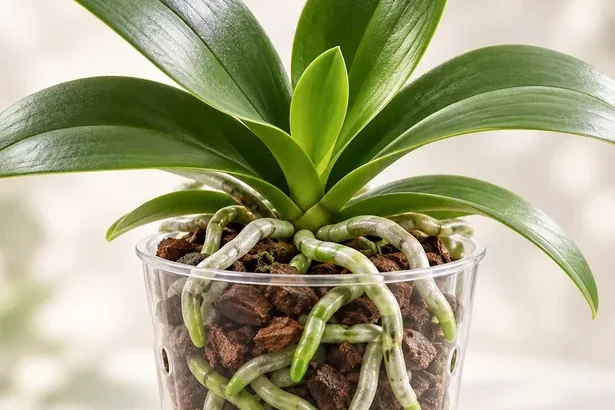
Check the plant first
Check the leaves, crown and roots. A firm plant making new growth can be managed differently from a small, dehydrated orchid with a weak root system. Flowering is not the only outcome worth protecting; rebuilding roots may be the more important goal.
Moth orchids do not require you to stop watering or put them in darkness after flowering. They can continue vegetative growth between displays. Keep suitable light, check moisture in the mix and watch for new roots or leaves.
Keep or cut a green spike?
Phalaenopsis is unusual among commonly grown orchids in sometimes flowering again from a still-green spike. The same pruning advice does not apply to every orchid group.
There is no single correct choice for every plant. A green spike does not need to be removed to “save energy,” and pruning it does not reliably produce another display.
| Choice | When it makes sense | What to expect |
|---|---|---|
|
Leave the green spike
|
The plant is healthy and the spike remains healthy
|
It may branch or continue flowering, but it may also remain inactive or dry later.
|
|
Shorten above a healthy node
|
You are trying for a side branch on a vigorous common hybrid
|
A branch may develop from the node, so do not cut into it.
|
|
Remove the spike near its base
|
The plant is weak, the spike is damaged, or recovery is the priority
|
New flowering will depend on a future spike or the plant’s normal cycle.
|
The node-cutting option on this page applies to common Phalaenopsis. Do not transfer it automatically to Cattleya, Dendrobium, Paphiopedilum or other orchid groups; flowering structures and pruning responses differ by genus and type.
Remove a dry flower spike
Use a clean, sharp cutting tool, disinfected appropriately before moving between plants. Trace the flower spike to its base so you do not confuse it with a root. Leave a little clearance from the leaves and crown; there is no need to shave the stem flush.
Do not pull or twist a stubborn spike out of the plant. Protect nearby roots and leaf bases. If only the tip has dried while the lower spike is green, decide based on the green section and the condition of the whole plant.
A dry flower stalk and soft decay spreading into the plant's center are not the same problem. A soft or blackening crown needs prompt inspection under orchid problems.
Keep checking for water
A bare spike does not make the roots stop using water. Continue checking the mix and draining fully after watering. If the season has become cooler or darker, the pot may dry more slowly; if the plant is growing in a warm, bright room, it may still use water steadily.
Do not keep an orchid dry in the hope that thirst will make it flower. Conversely, do not add water because a bare plant looks unhappy. Use the same center-of-pot check described in watering orchids.
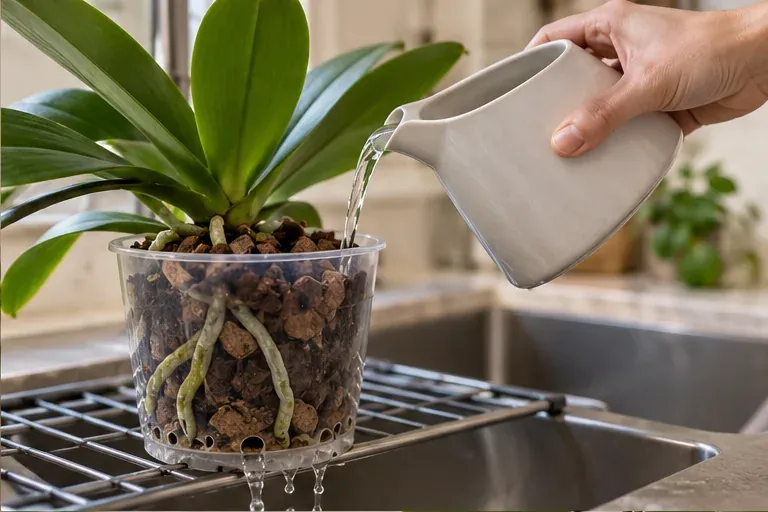
Is repotting needed?
After flowering is often a convenient time to repot, especially when roots are beginning active growth. But flowering ending is not, by itself, proof that the mix needs replacing.
Check for bark that has broken into fine particles, moss that stays densely wet, salt buildup, a pot that no longer drains properly or a root system that genuinely no longer fits. A healthy orchid may need fresh medium but no larger pot when repotting is due.
If roots are failing, do not wait for an ideal season just to preserve a few flowers. If the plant is stable in fresh, draining medium, unnecessary repotting adds disturbance without a clear benefit. If the medium or roots are in question, check whether the orchid actually needs repotting.
Feed new leaves and roots
Use a suitable, measured fertilizer routine while the plant is actively growing. Extra fertilizer does not turn a dry spike green again. Strong feeding also does not correct poor light or a damaged root system.
A new leaf and fresh root tips are worth recording. They show that the plant is building the structure needed for later flowering. Avoid judging the entire care routine by how quickly a side branch appears.
What happens next?
Common moth-orchid hybrids may grow leaves and roots before producing another flower spike. A green existing spike can behave differently from a new one, and growing conditions affect the timing. The wait varies from one orchid and set of growing conditions to another.
If a healthy, mature plant keeps growing but does not produce a spike, review light first, then the temperature pattern appropriate to the hybrid. Use how to rebloom an orchid and leave the old stalk alone unless there is another reason to trim it.
Keep healthy growth intact
After normal flowering, most orchids do not need a complete change of routine. Remove fallen petals, decide what to do with the spike, check the mix and keep a steady growing environment. Preserve healthy leaves and roots even if they no longer look like a showroom plant.
New roots and leaves are progress after flowering. A precise cut above a node matters much less than keeping the rest of the orchid healthy.
Common questions
Should I cut the stem above the second or third node?
A healthy node can sometimes produce a side branch on a common Phalaenopsis hybrid, but its position does not predict whether it will. Leaving a healthy green spike intact is also an option.
Does a moth orchid go dormant after flowering?
It may grow more slowly or focus on roots and leaves, but do not impose a dry, dark rest on a common Phalaenopsis. Continue condition-based care.
Can a brown spike turn green again?
A completely dry, dead flower spike will not return to active growth. The plant can still make another spike when its condition and growth cycle allow.
More Orchid Care Guides
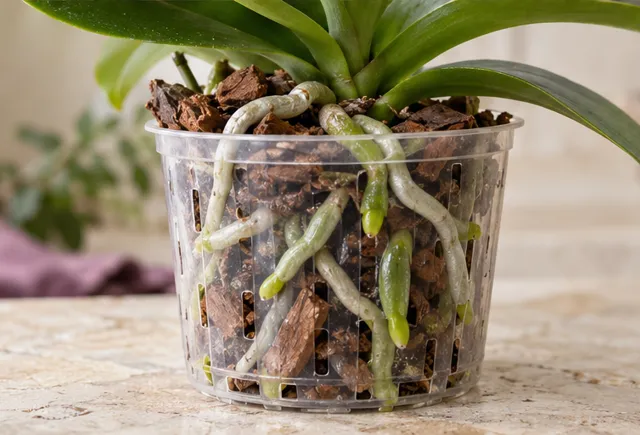
Healthy Orchid Roots
Tell normal silver or pale roots from damaged ones, understand aerial roots and know when to inspect inside the pot.
Read the guide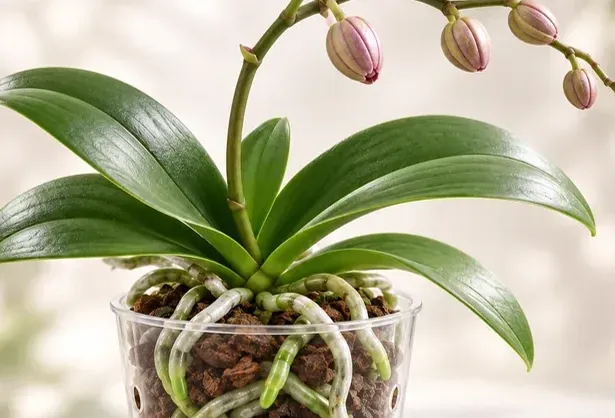
How to Get an Orchid to Rebloom
Check roots, light and temperature before trying to encourage a new flower spike. Know what to change—and what to leave alone.
Read the guide