
Start with the orchid type
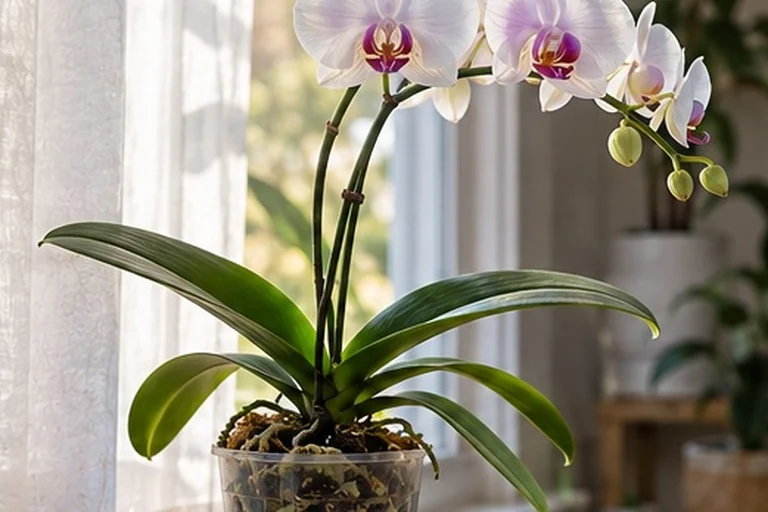
Many Phalaenopsis hybrids belong toward the lower-light end of commonly grown orchids. Cattleyas generally need brighter conditions, while Oncidium-alliance plants vary with their parentage. Dendrobiums are too diverse for one universal position.
Use these as first placements, then adjust from the light at leaf level and the plant's response. If the plant is not a Phalaenopsis, identify its group under orchid types before fixing a permanent window position.
| Plant group | Indoor setup | Watch for |
|---|---|---|
|
Phalaenopsis
|
Bright window light, often filtered; an east window is a good starting point
|
Avoid assuming “lower light” means no meaningful daylight.
|
|
Cattleya hybrids
|
Brighter window or a suitable grow-light setup
|
Increase exposure gradually and check leaf temperature.
|
|
Oncidium hybrids
|
Bright light suited to the hybrid; avoid treating all thin-leaved plants like sun-tolerant types
|
The care label and parentage matter more than the flower color.
|
|
Dendrobium
|
Identify the group before setting light and seasonal care
|
A warm-growing hybrid and a cool-resting type do not have identical needs.
|
Choose your window
East: often gives gentler morning sun and suitable light for a moth orchid. Check whether the glass or a nearby wall concentrates heat.
South: can offer helpful winter light in the Northern Hemisphere, but strong sun may need filtering in other seasons. A sheer curtain is easier to adjust than guessing a permanent distance from the window.
West: afternoon light can be intense and hot. Recheck a plant moved there on a cloudy day when the next clear afternoon arrives.
North: can suit some orchids in a bright, unobstructed room, but a shaded north window may be too dim for steady growth or flowering. Judge the actual light at the leaves.
Try the shadow check
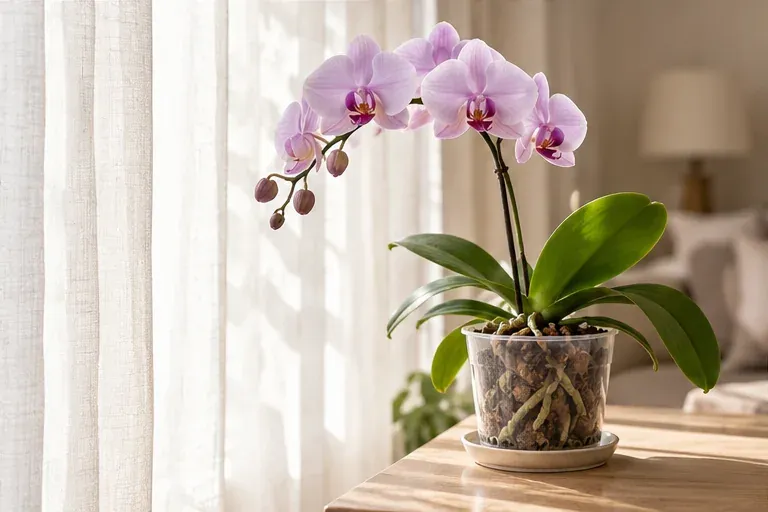
Hold your hand roughly 6 inches (15 cm) above the leaves on a bright day. A faint, soft-edged shadow suggests lower light; a sharper shadow suggests stronger light. The United States Botanic Garden describes this as a quick screening method.
It does not measure the whole day's exposure. Repeat the observation in the morning and afternoon. A room that looks bright to adapted human eyes may still be dim at the plant, especially several feet from a window.
A light meter can make comparisons more consistent. Phone readings vary by sensor and app. Use the same device to compare positions; treat the numbers as relative, not laboratory measurements.
Reading a light meter
For moth orchids grown under shaded greenhouse conditions, 1,000–2,000 foot-candles is a useful comparison range—about 10,800–21,500 lux. A windowsill can heat up much more quickly. Do not move a plant into hot direct sun just to reach a number on the meter.
Lux measures brightness as weighted for human vision. PPFD describes light useful for photosynthesis. There is no one exact lux-to-PPFD conversion for every lamp spectrum. Also distinguish a fixture's advertised lumens from the light arriving at a leaf: distance, optics and coverage all change the result.
Adding a grow light
For a common Phalaenopsis grown mainly under a lamp, a 12–14 hour light period is a practical starting range rather than a universal rule. Use a timer, keep a consistent dark period and adjust output or distance from the plant’s response. Orchids with specific seasonal day-length needs require their own schedule.
Place the lamp at the maker’s recommended distance for low-light plants. Output and coverage matter more than the bulb’s color or wattage. A small LED bar and a powerful panel cannot use the same fixed distance.
Check the leaves for heat and pale patches during the first few days. Raise or dim the lamp if exposure is too strong. Assess new growth over the following weeks; extending a weak light to 24 hours does not replace adequate daytime light.
When a lamp supplements a window, run it during the daytime so the combined light period still ends in the evening. Seasonal changes in daylight can change how much supplemental light is needed.
Sunlight or heat damage?
A pale or scorched area concentrated on the window-facing surface can point toward exposure damage. But yellow leaves have other causes, so check roots, leaf position and the speed of change before deciding. Moving the plant can stop further exposure, but it will not restore damaged tissue.
Remove the immediate stress first: filter the light or move the plant out of the hot beam. Preserve healthy leaf tissue. Follow yellow-leaf checks if the change is spreading or does not match the sun-exposed side.
Watch the next growth
After a change, watch for stable leaves and continued new growth. Lack of flowers alone is not a light-meter reading: root health, maturity, temperature and the plant's growth cycle also matter.
Take a photograph from the same angle every few weeks and record the position and any change you made. Do not move the plant again after every slow week. If a healthy moth orchid grows but will not flower, review light and temperature in how to get an orchid to rebloom.
Common questions
Can orchids take direct sun?
Some groups tolerate more sun than others. For common moth orchids, filtered light is a safer starting point. Gentle morning sun may be tolerated, but strong exposure through glass can damage leaves.
Is a north-facing window enough?
Sometimes, if it is bright and unobstructed. A deeply shaded north window may not be enough. Judge the light reaching the leaves; window direction alone is not enough.
Can an ordinary LED grow an orchid?
Yes, a white LED can support growth if enough light reaches the leaves over an adequate area and duration. A decorative bulb may be too weak at plant level. Published output and coverage measurements make a horticultural fixture easier to set up.
More Orchid Care Guides
Orchid Care for Beginners
Just brought an orchid home? Check the pot, choose a window and settle into a simple watering routine.
Read the guide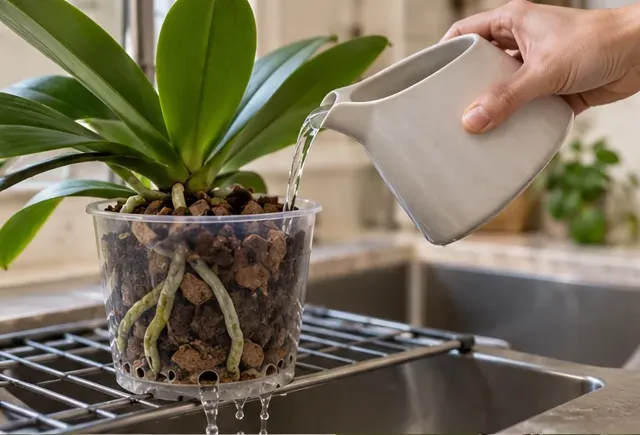
How to Water Orchids
Check moisture inside bark or moss, water thoroughly and let the pot drain. Learn what root color can—and cannot—tell you.
Read the guide