
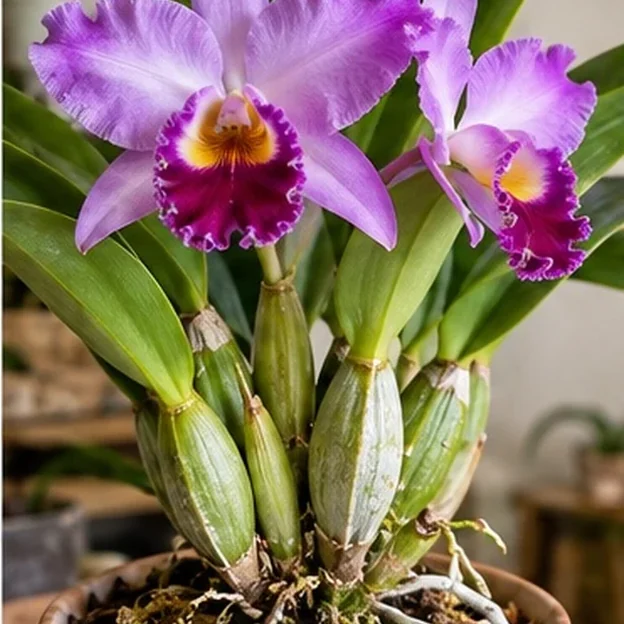
Find the direction of growth
The newest growth extends from the rhizome. Older firm pseudobulbs can continue to support the plant even after their leaves are gone. Do not remove them just because they are no longer the newest or most attractive part.
Identify the front—the direction of active new growth—before repotting. Place the older pseudobulbs toward the back of the pot so the new shoot has room to grow forward.
A flower sheath, when present, is not the same as a new leaf or a root. Do not cut a sheath just because it looks papery; development and flowering vary among plants.
Increase light gradually
Cattleyas generally need more light than common Phalaenopsis hybrids. A bright window with appropriate filtering or a suitable grow-light setup can work, but a hot beam through glass can still damage leaves.
Increase light gradually, especially for a plant that has been in shade. Check whether the leaves become hot or develop pale, damaged patches. Leaf color alone is not a reliable measure of light.
Use the species or hybrid name on the label to check its needs; not all orchids belong in low light.
| Observation | Check |
|---|---|
|
New growth develops but flowering is absent
|
Review light, maturity, growth cycle and root health together.
|
|
Damage concentrates on the sun-facing leaf surface
|
Review intensity and heat at that position.
|
|
New growth is much smaller than the previous one
|
Check roots, watering and the full growing environment.
|
|
Plant remains stable but growth is slow
|
Review season and type before forcing changes.
|
Water, then allow drying
Pseudobulbs store water, but a Cattleya can still dry out too much. Water thoroughly when the mix has dried, let the pot drain and check again before the next watering. Do not leave it standing in runoff.
Wrinkling can be a sign to inspect water supply and roots, but not every crease means immediate watering. Older pseudobulbs, developing shoots and damaged roots can all affect the way the plant looks. Check the mix instead of repeatedly adding water to a wet pot.
A bright, warm growing position can make a small open pot dry quickly. Recheck after changes in season, ventilation or pot material.
An airy mix and a steady pot
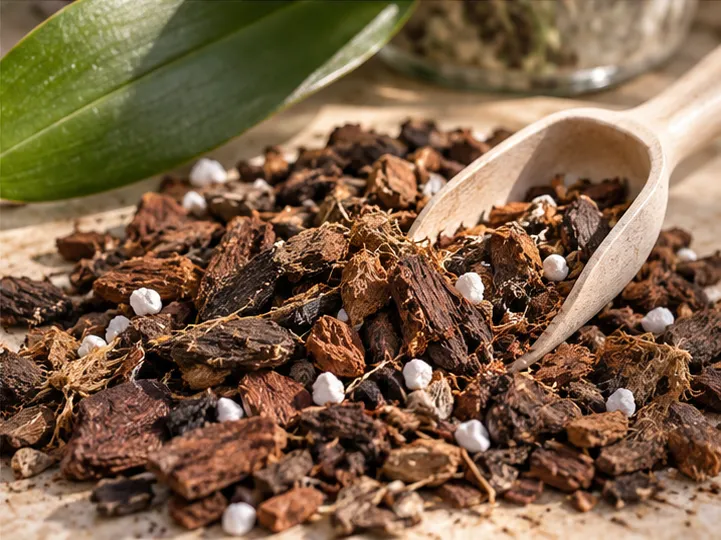
Use a coarse orchid mix that drains well but does not dry so fast that the roots repeatedly dehydrate. Match particle size to the pot and room. Replace mix that has broken down into fine, persistently wet material.
Choose a pot with room for the next growth direction but avoid a very large volume of unused wet medium. Stable support matters; a newly potted rhizome should not rock and damage fresh roots.
Keep the rhizome at the surface. Use stakes or clips for stability instead of burying old pseudobulbs. Review pot selection and orchid media together.
Indoors, some Cattleyas benefit from a modest moisture-retentive component mixed into bark so the root zone does not dry abruptly. The useful ratio depends on pot size, airflow and room humidity; a fixed bark-only recipe is not universal.
Repot around new roots
Routine Cattleya repotting is most successful when you work with the appearance of new roots, before they become long and easily broken. Timing differs among species and hybrids, so follow new-root growth instead of a calendar date.
Some two-leaved, or bifoliate, Cattleya species are sensitive to repotting at the wrong stage. Check the needs of a named species before disturbing its roots.
Rotting roots or badly broken-down mix may need attention sooner. Preserve firm roots and disturb them as little as possible.
Do you need to divide it?
A division needs enough healthy connected growth and roots to support recovery. A single old pseudobulb is much harder to establish than a division with several connected growths. Leave a weak plant undivided while it recovers.
Before any cut, identify the rhizome, active growths and healthy root systems. Clean and disinfect tools between plants. If you are new to the group, retaining a healthy undivided plant is often simpler than managing several stressed pieces.
Feed while it grows
Use a suitable measured fertilizer routine during active growth, with attention to water quality and accumulated salts. Do not add more fertilizer just because a flower sheath has not opened.
Check when that species or hybrid normally flowers. Some Cattleyas flower soon after growth matures; others wait. A sheath can also dry before buds develop in certain plants. Do not force it open to investigate.
After flowering
Remove a spent flower stalk carefully when it is finished, without cutting into the pseudobulb or leaf. Keep healthy older growth. Continue the watering pattern for the plant's current growth stage. Cattleya flower stalks are not managed like green Phalaenopsis spikes.
If flowering is absent after repeated periods of healthy new growth, review light and the requirements of the named hybrid or species. If each new growth is weaker, inspect roots and medium first. When symptoms overlap, compare root, leaf and flower patterns under common orchid problems; a named Cattleya may still need species-specific care.
Common questions
Can I keep a Cattleya beside my moth orchid?
Possibly, but Cattleyas generally need brighter light. The same window can be too dim for a Cattleya, especially if it sits farther from the glass.
Should I cut off leafless Cattleya pseudobulbs?
Keep firm older pseudobulbs attached; they store reserves the plant can still use. Remove only tissue that is clearly dead or diseased.
When should I repot a Cattleya?
Watch for its new-root cycle and identify the plant. Many are best repotted around the start of new roots, but timing-sensitive species need more specific guidance.
More Orchid Care Guides
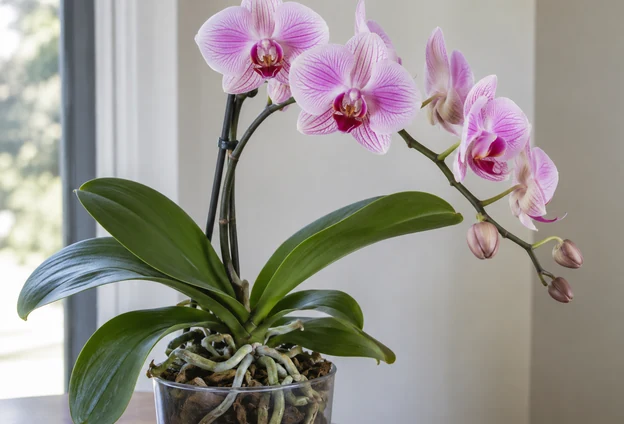
Phalaenopsis Orchid Care
Care for a common moth orchid through leaves, roots and flowering, with clear guidance on light, watering and repotting.
Read the guide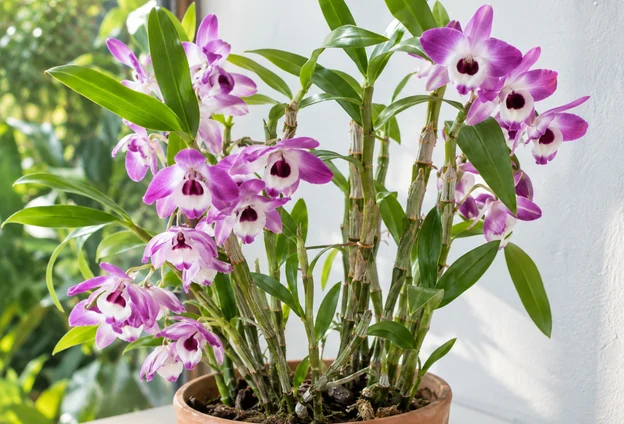
Dendrobium Orchid Care
Distinguish nobile-type and warm-growing Dendrobiums, keep healthy canes and avoid the wrong winter routine.
Read the guide