
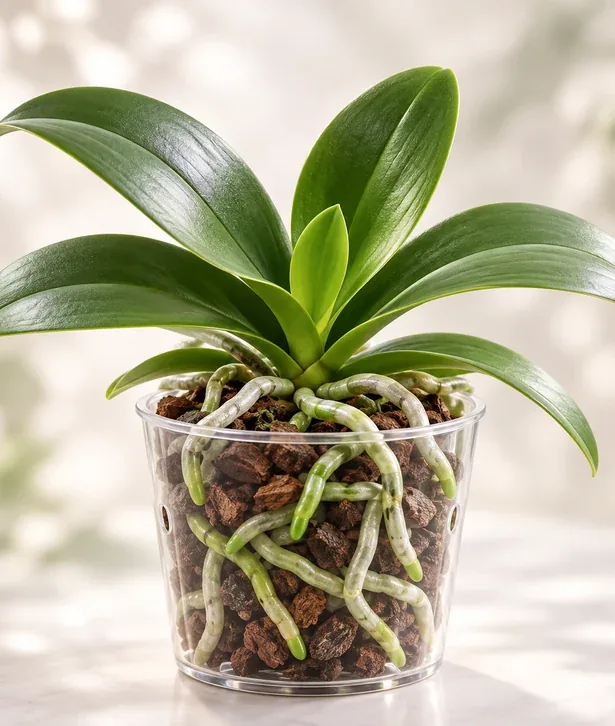
New Growth
Fresh root tips and a new central leaf show that the plant is growing. Keep the light steady and use a potting mix that drains freely.
Start with the orchid in your home. Learn when its pot needs water, what healthy roots look like, how to choose the right light and what to do when the flowers finish.
Follow a Phalaenopsis from active root and leaf growth to flower spike, buds and bloom — and learn which care signals matter at each stage.
Fresh root tips and a new central leaf show that the plant is growing. Keep the light steady and use a potting mix that drains freely.
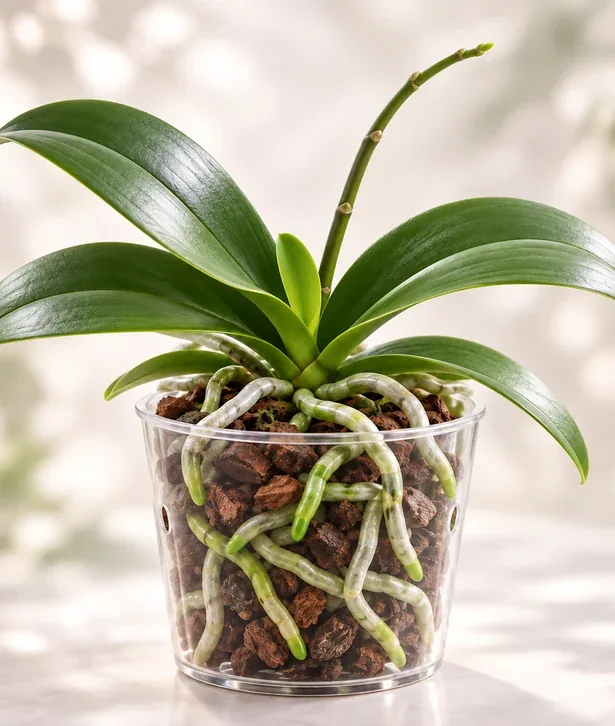
A flower spike usually emerges from between the leaves with a flatter, pointed tip and develops visible nodes as it extends.
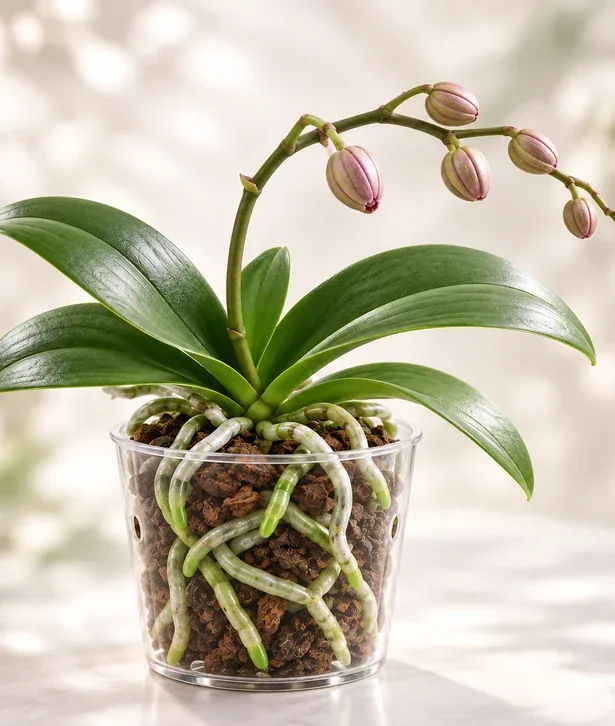
Once buds form, keep light, moisture and temperature reasonably stable. Sudden environmental changes can contribute to bud drop.
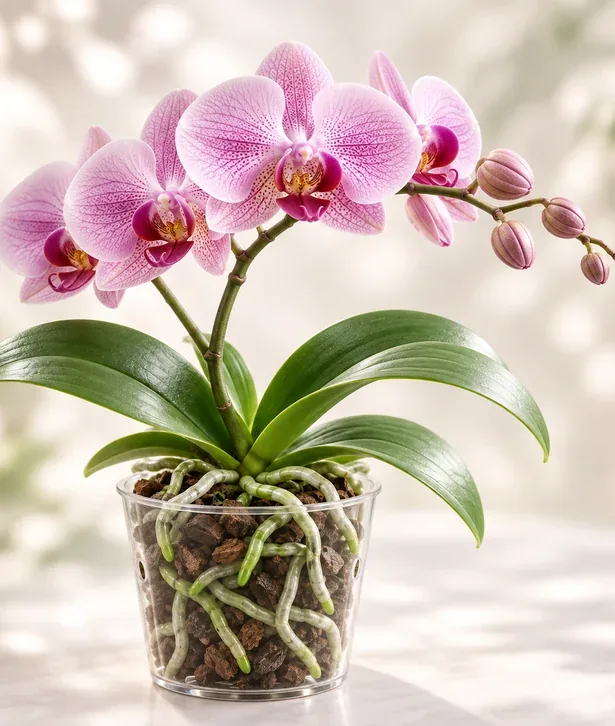
During flowering, keep the same care routine: bright filtered light, complete drainage and no water sitting in the crown.
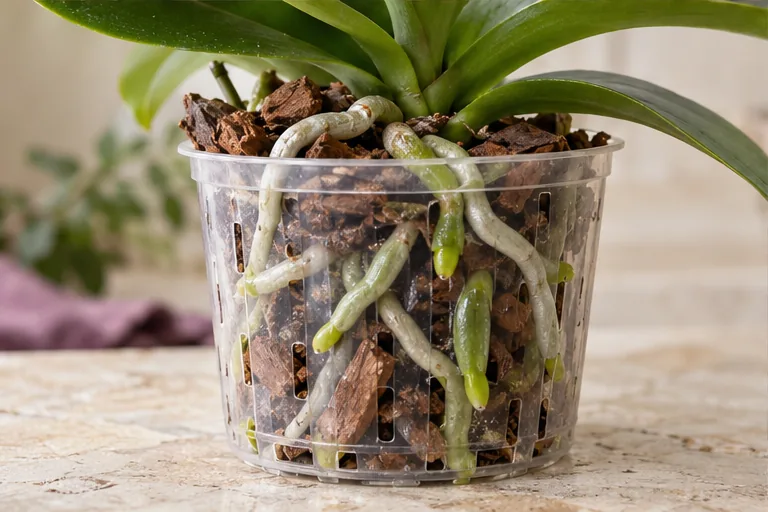
The thick outer layer of a moth orchid root takes up water and holds moisture around the living core. Exposed roots often turn green when wet and silver as they dry. Firmness matters more than color: a pale root inside the pot can be healthy, while a soft or hollow root needs closer attention.
For most potted moth orchids, start with bright filtered light, a freely draining pot and an airy growing mix. Water when the potting mix is nearly dry. Let the mix, pot size and orchid type set the watering interval; a fixed weekly schedule is too crude.
Water when the mix is nearly dry, then wet it thoroughly and let the pot drain completely. In a clear pot, root color can help, but also check bark moisture and pot weight because the right interval changes with season and growing conditions.
Orchid watering guideGive a moth orchid bright, filtered light. An east-facing window is often a useful starting point; strong south or west exposure may need a sheer curtain. Check for heat and direct sun where the leaves sit.
Orchid light requirementsFirm, plump roots are usually healthy. Exposed Phalaenopsis roots may be green after watering and silvery when dry; roots inside the pot can stay pale. Soft, hollow or collapsing tissue is a more useful warning than color alone.
Healthy vs damaged rootsA clear pot is not mandatory, but it is useful for indoor Phalaenopsis because you can inspect roots and moisture without disturbing the plant. Choose strong drainage and airflow, and avoid an oversized pot that leaves a large volume of wet medium around a small root system.
Choosing an orchid potRepot when the mix breaks down, the roots need attention or the pot no longer fits. After flowering is often convenient for moth orchids; other groups are best repotted as new roots appear. Damaged roots may need attention sooner.
How to repot an orchidNeither is universally better. Bark leaves larger air spaces and usually dries faster, while sphagnum holds more water. Match the mix to the pot, room humidity, airflow and how often you prefer to water.
Bark vs sphagnumStart with what the plant is showing now—light, moisture, roots, growth or flowers—then open the care topic that matches it.
Give bright, filtered light and watch the leaves. Too little light can limit growth and flowering; harsh direct sun can scorch.
Light tipsWater thoroughly as roots and bark approach dryness, then drain completely. A clear pot helps with moisture checks, but bark feel and pot weight still matter.
Watering helpWarm indoor conditions, gentle air movement and moderate humidity support growth. Feed lightly during active growth; extra fertilizer will not force a flower spike.
Growing indoors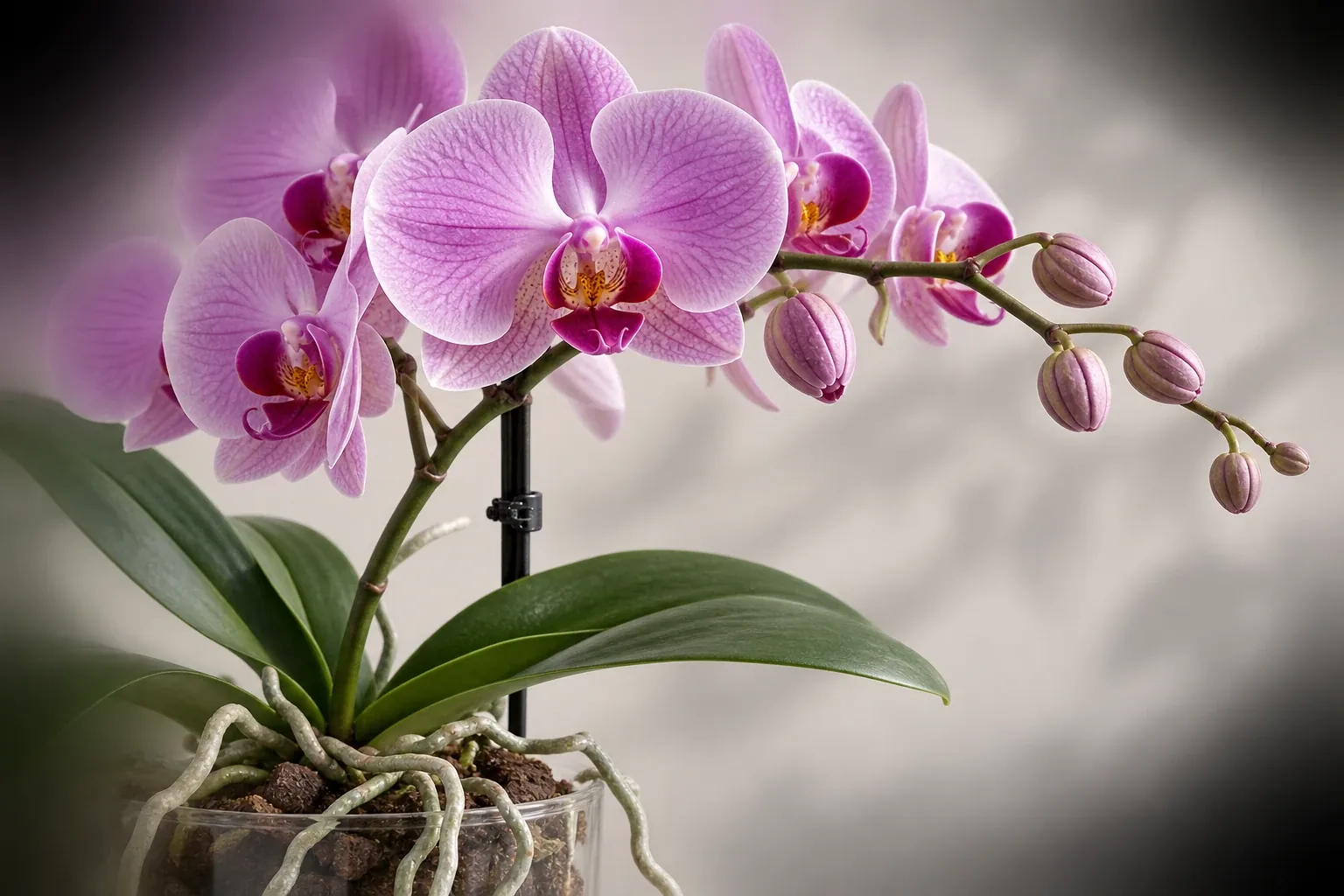
Repot when bark breaks down, roots are damaged, drainage slows or the root mass no longer fits the pot. Choose pot size for the roots — not the leaves.
Repotting stepsPhalaenopsis is the common indoor starting point, but Cattleya, Dendrobium, Oncidium and other orchids differ in light, drying and seasonal needs.
Browse typesYellow leaves, wrinkling, bud drop and poor growth are clues, not diagnoses. Inspect roots, moisture, light and recent changes before correcting anything.
TroubleshootingChoose a draining pot that fits the roots, a mix that dries predictably in your room and clean tools for repotting. Clear pots make root checks easier; slotted pots allow more air exchange. Bark usually dries faster than tightly packed sphagnum. Keep a soft tie or clip for a flower spike that needs support.
Check moisture before watering, empty the outer pot afterward and watch new roots and leaves between flower displays. A short note of watering and repotting dates helps you spot changes in how the pot dries.