
Leaves
Broad crown leaves or leaves carried on canes/pseudobulbs?
Compare four common orchid groups by plant structure, roots, water storage, light and seasonal care before applying genus-specific advice.
“Orchid care” is not one routine. These four commonly grown groups differ in structure, light tolerance, water storage and seasonal behavior.
Care for broad leaves and thick roots without pseudobulbs, with filtered light and careful root-zone moisture.
Open guide →Use the pseudobulbs and new-growth cycle to guide brighter light, watering and repotting timing.
Open guide →Identify the type before using rest-period advice; Dendrobiums do not all follow the same seasonal routine.
Open guide →Manage thinner roots, pseudobulbs and an airy mix while avoiding long periods of stagnant wetness.
Open guide →Phalaenopsis stores much of its water in thick leaves and does not have prominent pseudobulbs. Cattleyas and many Oncidium-alliance orchids store reserves in pseudobulbs. Dendrobiums use cane-like stems, but the genus contains very different groups with different seasonal behavior.
Those structures change how a plant responds to drying, light and rest. A rule that works for a common moth orchid can be wrong for a Dendrobium nobile type or a high-light Cattleya. Identification narrows the range of appropriate care before you alter temperature or watering.
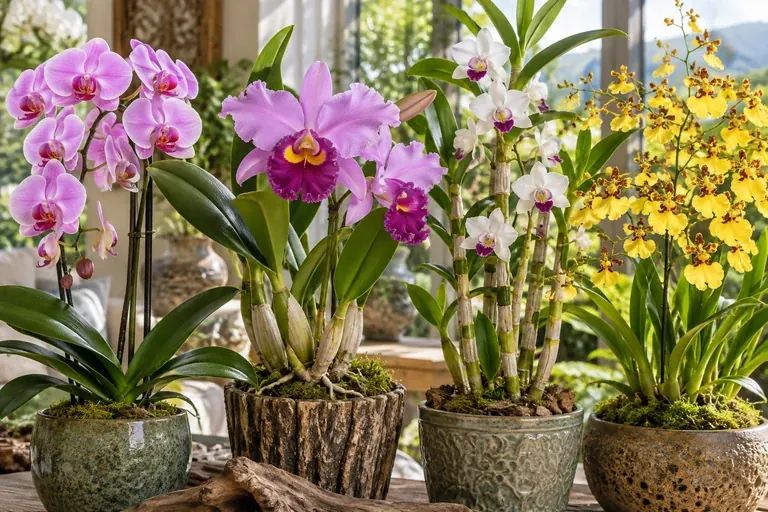
Dendrobium canes are stems that can store resources and, depending on the type, may still support the plant after leaves drop. Treating every bare cane as dead can remove living tissue. Wait for clear signs of dryness and death before cutting.
Cattleya pseudobulbs and Oncidium pseudobulbs also remain part of the plant’s reserve system. New growth usually develops from the rhizome and matures before or around flowering, depending on the hybrid.
Phalaenopsis has a different growth habit: broad leaves arise from a central stem and thick roots can grow inside or outside the pot. Its care should not be used as a universal template for every orchid.
Use this comparison to decide which detailed guide is most likely to fit the plant you have.
| Group | Recognizable structure | Care implication |
|---|---|---|
| Phalaenopsis | Broad leaves from a short central stem; thick roots; no pseudobulbs. | Avoid prolonged root-zone saturation and strong sudden sun; do not expect a dry seasonal rest by default. |
| Cattleya | Pseudobulbs connected by a rhizome, often with one or two leaves. | Usually wants brighter light than Phalaenopsis and an airy root zone that dries appropriately between waterings. |
| Dendrobium | Cane-like stems; leaf pattern and flower position vary widely by type. | Identify the Dendrobium group before applying cool/dry rest advice. |
| Oncidium alliance | Pseudobulbs with generally thinner roots and arching flower sprays in many hybrids. | Keep roots airy while avoiding extremes of prolonged dryness during active growth. |
You do not need a species-level identification to avoid the biggest “one rule for all orchids” mistakes.
Broad crown leaves or leaves carried on canes/pseudobulbs?
Central stem, cane or creeping rhizome with pseudobulbs?
Very thick Phalaenopsis-like roots or finer roots around pseudobulbs?
Single crown growth or new shoots appearing beside older growths?
Keep the nursery label when available; hybrid group is often enough to choose a care guide.
You do not need to identify every species to improve care. Recognizing the growth habit often tells you which generic advice to ignore.
Moth-orchid advice is common online, but orchids with pseudobulbs, canes or strong seasonal cycles need a different routine. Start by asking whether the plant grows from one crown or produces new shoots beside older growths.
Cattleya and many Oncidium-alliance orchids use pseudobulbs to store water and reserves. Older pseudobulbs can still support the plant after flowering. Their presence changes how you interpret temporary drying and how you judge a mature growth cycle.
Some Dendrobiums shed leaves from older canes or have seasonal behavior that looks alarming to a Phalaenopsis grower. Do not cut a cane only because it is leafless. Remove it only when it is clearly dead and dry.
A hybrid name or even a reliable genus label can prevent the wrong temperature or rest advice. Keep the tag with the plant. If the label is gone, use structure, leaves, roots and growth habit to choose the closest care group before making seasonal changes.
The right orchid group narrows the choices for light, water and seasonal care.