
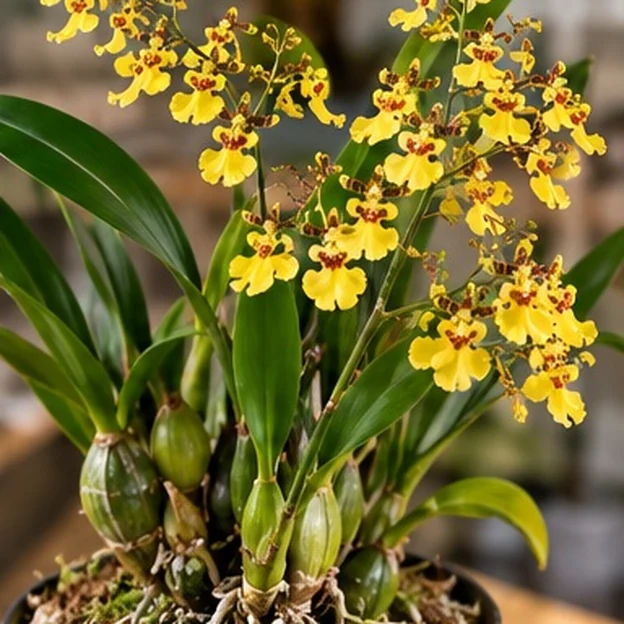
New shoots and pseudobulbs
Many of these orchids develop a sequence of pseudobulbs along a rhizome, with leaves and flower spikes associated with the growths. The new growth needs space and support while it develops its own roots. Older firm pseudobulbs can continue to help the plant.
Do not remove an old pseudobulb only because it is wrinkled or no longer flowers. Check firmness, the rest of the plant and whether the change is new. A naturally ridged or older growth is not the same as a suddenly collapsing one.
Even moisture, open drainage
Many common Oncidium hybrids have fine roots that should not stay dry for long while the plant is growing. Water the mix thoroughly, let it drain and check the center before watering again. Do not keep it saturated.
A small ventilated pot in a warm room may dry too quickly; a large pot of broken-down mix may stay wet too long. Check the pot and mix before giving more water to a plant with wrinkled pseudobulbs.
What do wrinkles mean?
Pleating and wrinkles are clues, not precise diagnoses. An old accordion-like leaf may stay pleated even after care improves, so judge the next growth instead.
| Observation | Check first |
|---|---|
|
New or increasing bulb shrinkage with a dry pot
|
Whether watering has kept up with demand and whether roots remain firm
|
|
Shrinkage despite wet medium
|
Root function, drainage and deterioration in the center of the pot
|
|
Older bulbs creased while new growth is vigorous
|
Age, the plant's normal structure and use of stored resources
|
|
Pleated developing leaves
|
Interrupted growth or water supply, alongside other environmental causes
|
|
Soft, dark or spreading tissue damage
|
A more urgent tissue problem; extra soaking is not the answer
|
Choose the light
Many Oncidium-alliance hybrids need bright conditions, often more than a common moth orchid. The alliance is varied, so do not treat every thin-leaved or cool-growing relative as a plant for intense heat.
Use the actual window exposure and the care label. Increase light gradually and keep foliage away from hot glass or a harsh afternoon beam. A suitable grow light can support plants where natural light is weak.
If a plant grows but does not flower, review light, maturity and the new growth's development. If every new growth is smaller, check roots and the entire environment before attempting to force flowers.
Temperature and the hybrid
Common hybrids can be relatively adaptable, while others inherit preferences from cooler- or warmer-growing parents. A genus-style sales label can hide those differences. Ask for the named cross or cultivar where possible.
Measure the minimum and maximum near the plant; the house thermostat may not reflect the window conditions. A plant can experience hot sunny afternoons and cold nights at the same window. Keep conditions within the needs of the actual hybrid.
Mix for finer roots
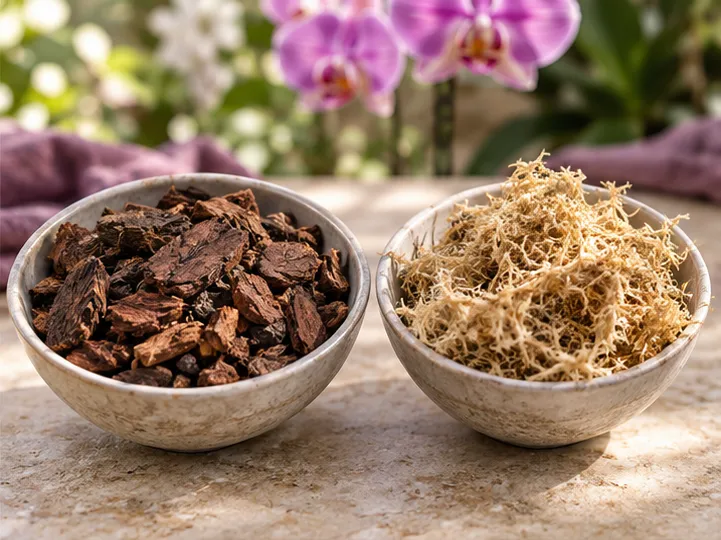
Use an airy orchid mix that holds enough moisture without collapsing into a dense wet mass. Finer-rooted plants may need a different texture from a coarse-rooted Cattleya. The best blend also depends on pot size and room conditions.
Replace deteriorating medium before fine roots are trapped in a dense, stale center. Fine roots can become entangled in old material, so work gently during repotting. Do not strip the root system aggressively just to remove every last particle.
A draining pot should fit the root system while leaving enough room for new growth. Avoid burying the pseudobulbs to keep the plant upright.
Repot as roots begin
Plan routine repotting for the start of new root growth and handle fresh tips carefully. Finishing a flower display does not always mean the plant is ready to repot.
If the old medium is failing, its condition may make earlier action necessary. Preserve healthy roots and stabilize the plant afterward so that developing tips are not repeatedly disturbed.
For signs of stale or collapsed medium, see repotting orchids. Adapt the potting method to the Oncidium's rhizome, finer roots and direction of new growth.
Feeding and flowering
Apply fertilizer at a measured dilution during active growth, and periodically rinse the mix with plain water to remove accumulated salts. More fertilizer does not compensate for repeated drying stress, poor roots or inadequate light.
After the flowers finish, a spent flower stalk can be removed carefully without cutting into the pseudobulb. Preserve the healthy pseudobulbs and leaves. Later flowering usually depends on the development and maturity of subsequent growth, not on cutting a spent stalk above a Phalaenopsis-style node.
Many common Oncidium hybrids flower as a new growth matures and do not need a Phalaenopsis-style cooling cue. Use the hybrid identity and growth cycle before changing temperature or watering to force bloom.
Watch the next growth
Record when new shoots appear, when they produce roots and whether the new pseudobulbs finish at a healthy size. Note the mix and watering behavior through warmer and cooler months.
Compare the newest growth with the one before it. A plant with older creased bulbs but strong new growth may be improving; a plant with repeated smaller growths needs its conditions reviewed. Judge the trend from several growths, not from one wrinkle.
Common questions
Should Oncidium dry out like a Cattleya?
Many common Oncidium-alliance hybrids need more even moisture during active growth. Avoid prolonged drying as a universal routine, while still maintaining air and drainage.
Do wrinkled pseudobulbs always mean underwatering?
No. Damaged roots in wet medium can limit water uptake, and older growth can also be naturally creased. Check the roots, moisture and new growth together.
Will a spent Oncidium flower spike rebloom like a moth orchid?
Do not apply the common Phalaenopsis green-spike pruning approach. Preserve the pseudobulb and expect flowering to follow the plant’s own growth cycle.
More Orchid Care Guides
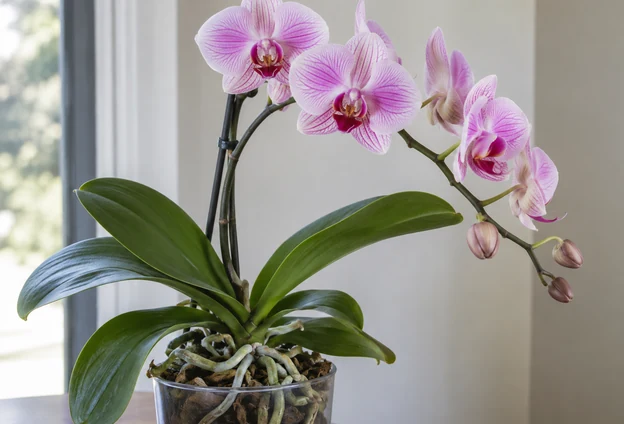
Phalaenopsis Orchid Care
Care for a common moth orchid through leaves, roots and flowering, with clear guidance on light, watering and repotting.
Read the guide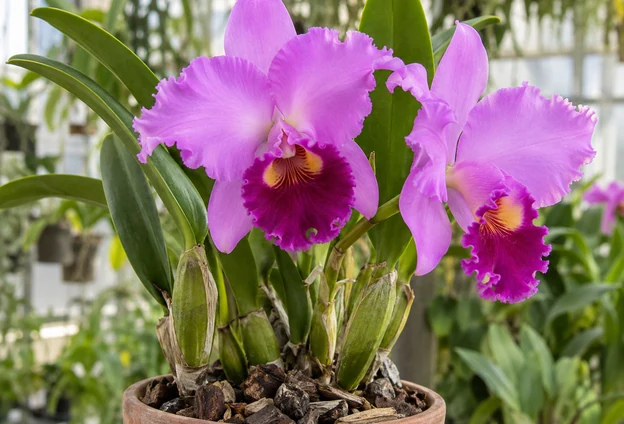
Cattleya Orchid Care
Give Cattleyas suitable light, understand their storage stems and choose the right moment to repot.
Read the guide