
Light
Is bright filtered light reaching the leaves?
Practical orchid care for watering, light, roots, potting media and fertilizer. Build a routine around the orchid, pot and conditions you actually have.
A fixed calendar is less reliable than reading the pot, roots, leaves and light. These four guides cover the decisions most indoor orchid owners make repeatedly.
Set up light, drainage and a simple routine without changing everything at once.
Open guide →Judge moisture from the pot and growing mix, then water thoroughly and let excess water drain.
Open guide →Place the leaves where they receive bright filtered light and learn when stronger exposure becomes risky.
Open guide →Use fertilizer as a supplement to healthy roots and light, not as a replacement for either one.
Open guide →Light sets the plant’s capacity to grow. Pot design and potting mix determine how quickly water leaves the root zone. Temperature, airflow and humidity then change how fast that water is used. This is why two orchids in the same room can need different watering intervals.
For a common Phalaenopsis, roots should receive moisture and air without staying waterlogged. Other orchid groups can have different seasonal patterns, storage organs and light needs, so identify the plant before applying a strict rule meant for moth orchids.
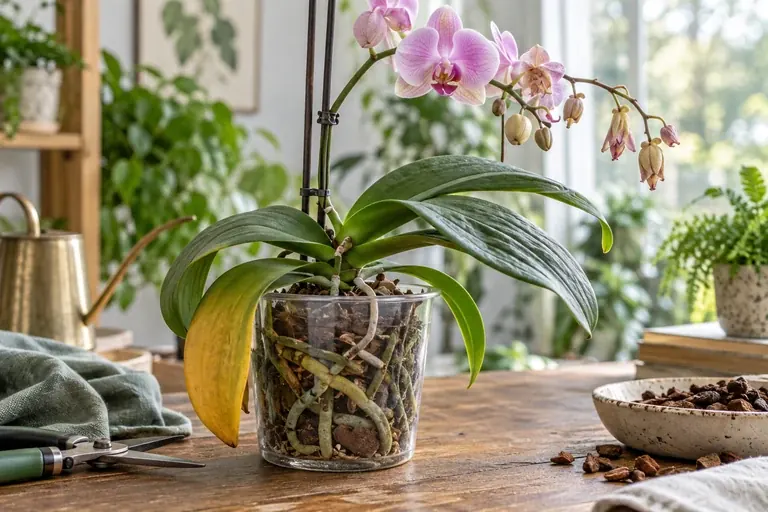
A clear inner pot can make root inspection easier, but root color alone is not a complete moisture gauge. Feel the mix, compare pot weight and notice how long the center stays damp. Bark normally dries faster than tightly packed sphagnum, while a large decorative cover pot can slow evaporation.
Water thoroughly when the medium is approaching the appropriate dryness for that orchid, then allow drainage. Do not leave the inner pot standing in collected water. If the pot stays wet for a long time and roots are soft or collapsing, solve the root-zone problem before increasing fertilizer or watering again.
Changes in season matter. Lower winter light often slows water use; warmer, brighter conditions can speed it up. Compare the weight and moisture of this pot between waterings; use a calendar only to remind you to check.
The same plant can need a different interval after a change in pot, medium, light or season. Check the cause before changing several variables at once.
| Factor | What it changes | Check |
|---|---|---|
| Bark vs. sphagnum | Bark leaves larger air spaces and usually dries faster; sphagnum can hold much more water. | Check moisture deeper in the pot, not only at the surface. |
| Pot size and drainage | A large volume of wet medium around a small root system can stay damp too long. | Choose a pot that fits the healthy root mass and drains freely. |
| Light and season | Higher usable light usually increases growth and water use; dimmer periods can slow both. | Recheck the leaf position and pot drying rate when seasons change. |
| Air movement and humidity | Still humid air slows drying; dry moving air can speed it up. | Adjust watering from actual drying, not from a calendar. |
| Root condition | Damaged roots absorb less water even when leaves look dehydrated. | Inspect roots before repeatedly adding more water to a wet pot. |
Look at the plant in the same order each time. That keeps one symptom from pushing you into unnecessary changes.
Is bright filtered light reaching the leaves?
Is the medium actually dry enough for this orchid?
Are the roots firm and functioning, or soft and hollow?
Are leaves, roots or new growth progressing normally?
If adjustment is needed, change one major variable and observe.
A fixed watering day, one exposed root or a wilted leaf can give the wrong signal. Check the mix and roots together before changing the routine.
A calendar can remind you to check the pot, but it cannot tell you whether the center of the medium is still wet. Pot size, bark or moss, temperature, airflow and season all change drying time. Check moisture first; then decide whether to water.
Exposed Phalaenopsis roots often look silvery when dry and greener when wet, but roots inside the pot may look different and other orchids do not follow the same visual pattern. Texture, pot moisture and the condition of the whole plant matter more than one color.
Fertilizer supplies nutrients; it does not rebuild rotted roots or replace light. If growth is poor, first check the root zone, usable light and the way the pot dries. Feeding a stressed plant more heavily can add salts without solving the limiting problem.
Moving the plant, changing the pot, altering the watering interval and adding stronger fertilizer at the same time makes it hard to know what helped or harmed. Correct the clearest issue first, then give the plant time to respond before making another major change.
Start with light, drainage and root condition. Once those are stable, watering and feeding become much easier to judge.