
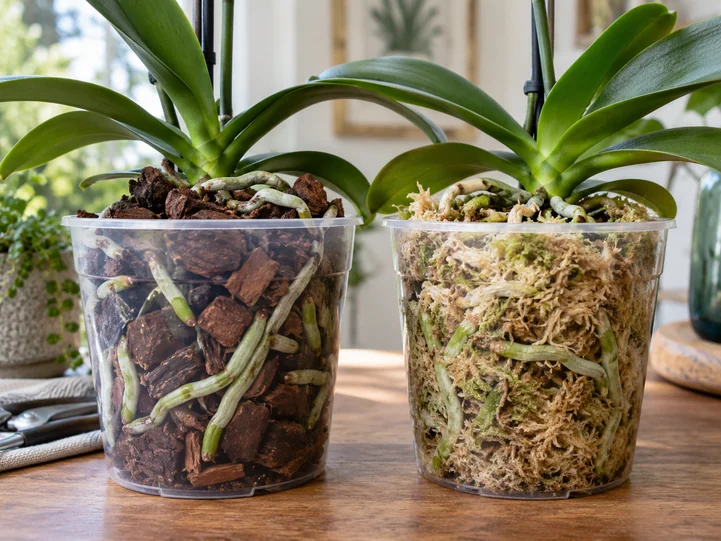
Match the material to the pot
Before changing medium, inspect the pot. Is it much larger than the roots? Are its drainage holes blocked? Does it sit in water inside a decorative cover? Correct those issues first.
In a warm, dry room, coarse bark may need frequent checks. A modest moisture-retentive component can help when the rest of the setup is suitable. In a cooler room, densely packed moss in a large plastic pot may remain wet longer than expected. A more open mix or a better-fitting pot can be easier to manage.
Do not make a media choice solely from your local outdoor climate. Heating, air conditioning, window exposure and air movement create a different environment inside the room.
How each holds water
These are general tendencies. A small ventilated moss pot can dry faster than a large pot of old fine bark. The container and packing can outweigh the name of the mix.
| Question | Bark | Long-fiber sphagnum |
|---|---|---|
|
How does it hold water?
|
Depends on bark type, size and age; often drains and dries relatively quickly
|
Holds substantial moisture, especially when tightly packed
|
|
What can fool you?
|
A dry surface or water that initially runs through without wetting dry bark
|
A dry outer layer with a still-wet center
|
|
Which routine may suit it?
|
A grower who can check a faster-drying pot and water thoroughly
|
A grower who can judge internal moisture and avoid automatic top-ups
|
|
What happens as it ages?
|
Breaks into finer material and can lose open structure
|
Can compact and deteriorate; condition still needs inspection
|
|
Can it be overwatered?
|
Yes, particularly in old medium or an oversized pot
|
Yes, particularly in a densely packed, slowly drying pot
|
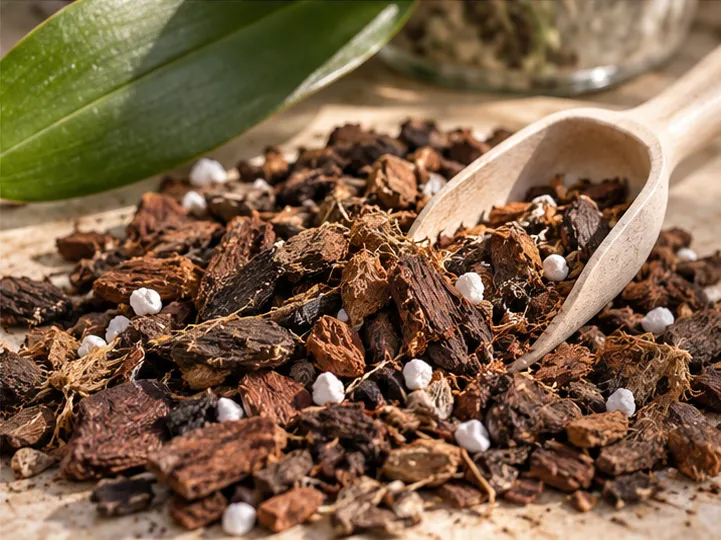
Check for a hidden plug
Some plants are sold with a compact nursery plug around their oldest roots and a different material around it. The outer bark can look ready for watering while the plug remains damp.
Do not tear out every nursery plug on arrival. Check moisture in the center as well as the outer mix. If the plant is healthy, learn the pot and plan routine repotting sensibly. If roots are deteriorating in the wet core, deal with the center instead of watering the dry-looking edge again.
During repotting, remove accessible old material gently while preserving healthy roots. Pulling a plug away violently can do more damage than careful separation.
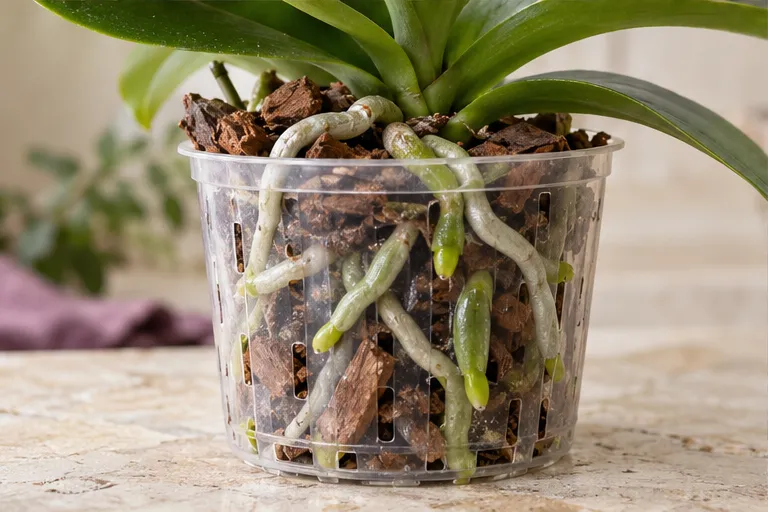
Can you mix them?
Yes. A blend can combine structure with moisture retention. The proportion is not universal, and the way the materials are distributed matters. A large dense ball of moss surrounded by coarse bark does not dry like an evenly prepared blend.
If you use both, keep the mix loose and consider how you will check moisture. Avoid compressing moss into the spaces until no air remains. Adding bark does not fix moss that has been packed too tightly.
Record the ingredients and approximate proportions so you can repeat a blend that works at the next repot.
Changing from moss to bark
A plant moved into a more open medium may need water checks sooner than before. Fresh dry bark can also resist wetting initially. Prepare it according to the package guidance and make sure a thorough watering actually wets the mix.
Do not carry over a slow moss-watering interval without checking. Equally, do not keep the new bark constantly wet because the roots used to be in moss. Monitor the mix and the remaining roots as the plant adjusts.
Keep the light and other care reasonably stable during the transition. If leaves soften, inspect moisture and roots before concluding that bark itself is the cause.
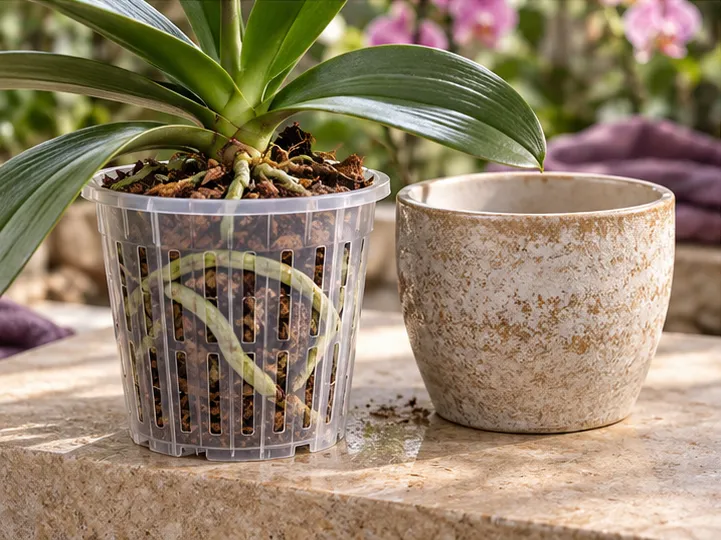
Changing from bark to moss
Expect the center to retain water differently. A pot that looks dry on the surface may not be ready. Start with a container that fits the root system and place the moss without tightly compressing it.
Avoid using the old bark routine as an automatic schedule. Frequent small splashes may leave the core wet while only refreshing the outer layer. Water based on internal moisture, then allow excess water to leave.
Before switching from bark to moss or the other way round, check pot size and drainage. A smaller adjustment may solve the drying problem without a complete change of mix.
Which is easier to manage?
Choose the material whose moisture you can check reliably. Bark in a clear pot makes some roots and air spaces easy to see. Moss can also work well, but its center may stay wet after the surface feels dry.
Choose a manageable container and check it directly. Do not select a medium in the hope that it will survive any watering pattern. Use the same three moisture checks in how to water orchids: internal moisture, pot weight and root condition.
Learn the new drying pattern
After a thorough watering and full drainage, note how the pot feels. Recheck as it dries. Is the center staying wet while the outer roots dry? Is the entire pot drying so rapidly that you cannot keep up? Are the roots firm and the leaves stable?
If the center stays wet for too long, review pot size and packing. If the whole pot dries too quickly to manage, consider a little more moisture retention at the next repot.
Common questions
Is sphagnum moss bad for orchid roots?
Not inherently. It can work when the pot fits, the moss is not overpacked and watering follows internal moisture. Persistent saturation is the problem, not the name of the material.
Can I put bark on top of moss?
A decorative layer does not make the center dry faster. It may hide a wet core, so check below it and consider a more consistent medium when repotting is due.
Should I remove all moss before switching to bark?
Remove accessible old or deteriorated material gently, especially a dense core that behaves differently. Do not tear healthy roots just to achieve an absolutely bare root system.
More Orchid Care Guides
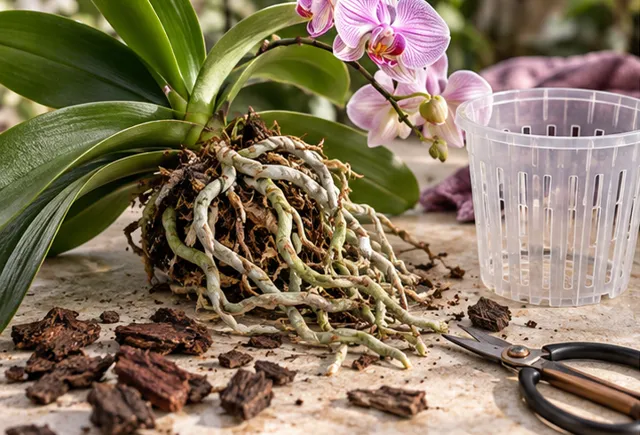
How to Repot an Orchid
Work through pot removal, root checks, fresh mix and aftercare without cutting healthy roots or burying the crown.
Read the guide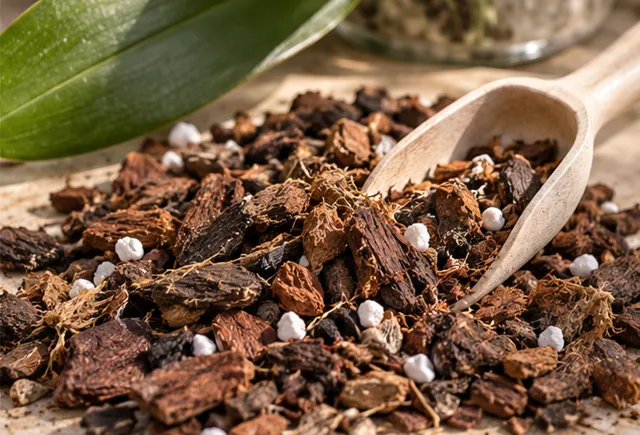
Choosing an Orchid Potting Mix
Compare bark, sphagnum and other ingredients, choose a particle size and spot a mix that needs replacing.
Read the guide