
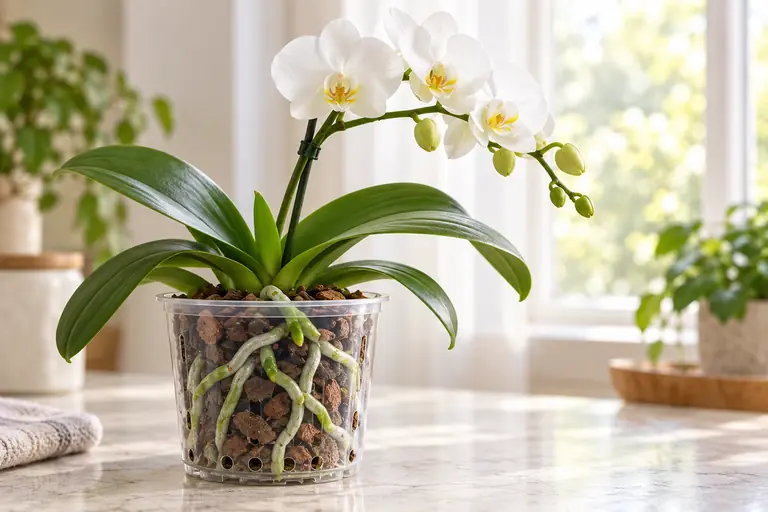
What a clear pot shows
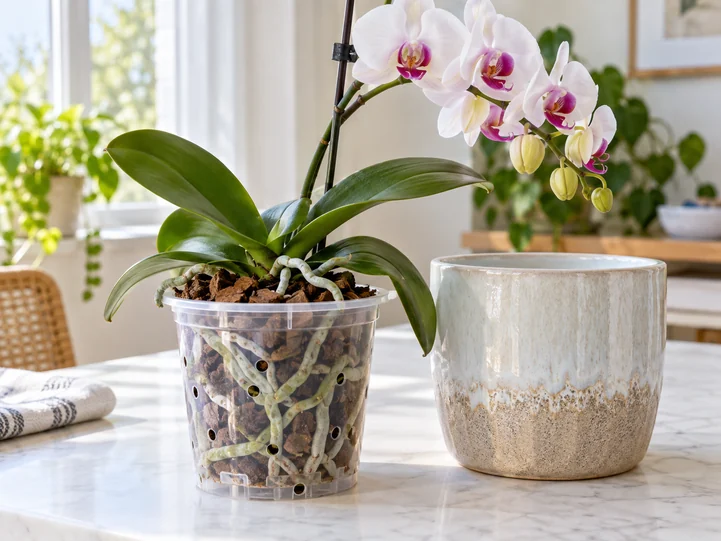
Visibility is the main advantage. You can follow new root tips, spot roots that are turning soft or hollow, see moisture lingering along the wall and notice a compact nursery plug inside coarser bark.
Light can reach roots through a transparent wall, and light-exposed Phalaenopsis roots can photosynthesize. That does not make transparency more important than drainage, and the pot should not be placed in hot direct sun. For home growers, the clear wall mainly makes the root zone easier to inspect.
Clear plastic is optional. Orchids can also grow well in opaque plastic, terracotta, baskets and other suitable containers when aeration, moisture and drainage are appropriate. For a broader comparison, see orchid pot types, size and drainage.
Read roots through the pot
Read color together with texture. Healthy Phalaenopsis roots have a spongy outer layer called velamen. It often looks greener when hydrated and paler or silvery as it dries. Roots that receive little light may remain cream, tan or pale even when healthy.
| What you see | What it can mean | What to check next |
|---|---|---|
Green and firm | The visible velamen is hydrated or recently watered. | Do not water again only because the surface bark looks dry; check the center and pot weight. |
Silver-gray and firm | Visible roots are drier. | Check whether the center of the medium is dry enough before watering. |
Cream, white or tan and firm | A shaded or older root may still be functional. | Judge firmness and active tips rather than color alone. |
Brown but firm | Staining, age or contact with old medium can darken a root. | Look for softness, collapse or a hollow outer layer before calling it dead. |
Brown or black, soft, hollow or collapsing | The root is damaged or dead. | Inspect the medium, drainage and watering pattern; see the guide to orchid root rot. |
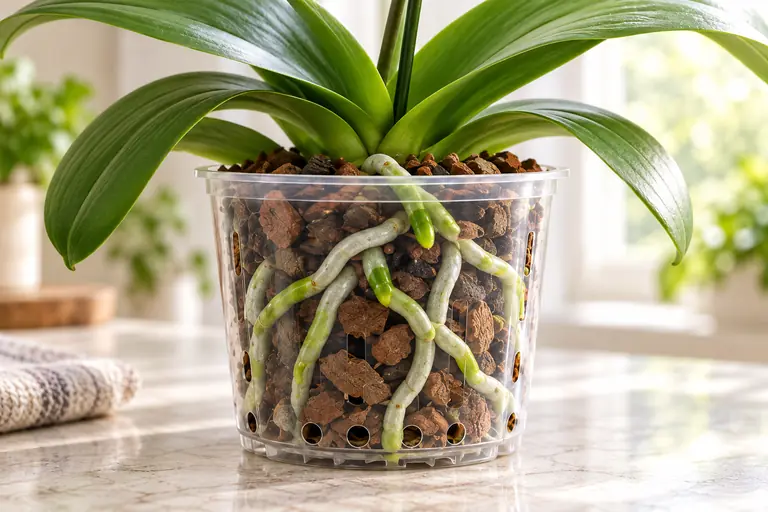
Drainage and airflow come first
A clear pot still has to work as a growing container. Water should escape freely. Keep bottom holes open; side slots add ventilation and can shorten drying time. Two pots of the same diameter can behave very differently if one is heavily slotted.
Match the pot to the medium. Coarse bark leaves larger air spaces and usually drains quickly. Sphagnum holds more water and can remain wet in the center after the outer roots look dry. Moving from moss to bark, or from a solid pot to a heavily slotted one, changes how fast the root zone dries.
More ventilation is not always better. In a warm, dry room, an extremely open pot can dry too quickly. In a cool room with little air movement, extra slots may help. Steady, predictable drying matters more than the number of holes.
Choose the size by the healthy roots
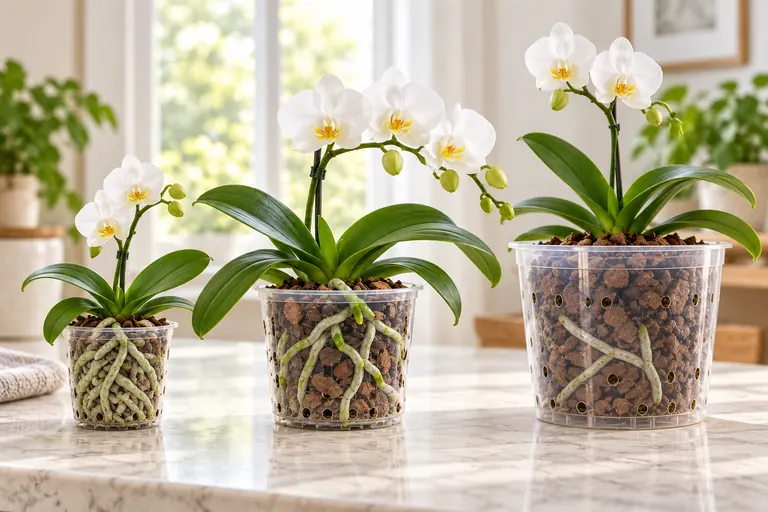
Do not size the pot to the leaves or flowers. Size it to the healthy roots. A larger clear pot may look neater, but the extra volume can hold more wet medium around a small root system.
After removing the old medium, lower the cleaned roots into the empty pot. They should fit without sharp bends or crushing, with enough room to work fresh medium between them. A wide ring of empty space around a small root system usually means the pot is too large.
Moving from a 4-inch (about 10 cm) pot to a 5-inch (about 13 cm) pot adds more medium than the small change in diameter suggests. If the roots still fit comfortably in the smaller pot, staying near the current size usually makes moisture easier to control.
Check the fit before filling
- Too small: firm roots must be sharply folded or compressed to enter.
- Good fit: roots settle naturally and fresh medium can fill the spaces around them.
- Too large: a small root bundle sits inside a broad reservoir of unused wet medium.
For the full repotting sequence, use how to repot an orchid.
Using a clear pot inside a decorative cover
The clear growing pot does not have to stay on display. It can sit inside a ceramic or opaque outer cover, which adds weight and hides the plastic while leaving the inner pot easy to inspect.
Do not let the outer cover hold runoff. Remove the inner pot for watering, let it drain, empty the cover and then return the plant. If the clear pot is wedged tightly inside, use a larger cover that is easier to remove.
Roots do not need to remain exposed to room light all day for the clear pot to be useful. Pull the inner pot out when you want to inspect the root zone.
Condensation, algae and white deposits
Condensation: droplets on the inside wall confirm that moisture is present, but the center may be wetter or drier than the wall suggests. Check the pot weight and the medium as well.
Green algae: light and persistent moisture can produce a green film inside a clear pot. A light coating is usually cosmetic. Repotting is more relevant when the medium stays wet too long or the roots are softening.
White crust: mineral and fertilizer salts can collect on plastic, bark and roots. Heavy recurring deposits are a reason to review water quality, fertilizer strength and flushing. A crust on the surface is different from healthy silvery velamen.
Water from the whole pot, not root color alone
A clear wall gives useful clues, but it is not a watering schedule. Check root color and firmness, condensation, the dryness of the medium, pot weight and room conditions together.
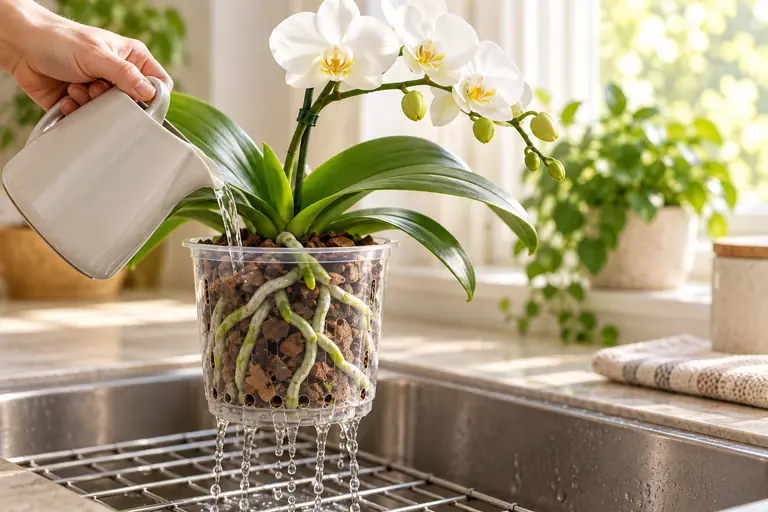
Water the medium thoroughly and let the excess leave through the bottom. Never leave the clear pot standing in runoff. If it sits inside a decorative cover, drain the inner pot and empty the cover before putting it back.
Do not water only because the roots against the wall have turned silver. The center can stay wetter than the outside, especially with compact sphagnum, old fine bark or a dense nursery plug. The guide to watering orchids in bark or moss explains how to check the whole pot.
When to repot
Roots pressed against the wall are not, by themselves, a reason to move up a pot size. Many orchids naturally fill the container. Repot when the medium has broken down, drainage has slowed, a wet central plug persists, damaged roots are increasing, or the healthy root system no longer fits.
If the bark has become fine and dark, the center stays wet much longer than before, or several roots are deteriorating behind the wall, inspect the plant before adding more holes. Fresh medium may be what the root zone needs. See orchid potting mix for choosing a replacement medium.
Use a clear pot to inspect the root zone, not to justify a larger pot or more frequent watering. Fit it to the healthy roots, keep drainage open and judge moisture from the whole pot—not from one green or silver root at the wall.
Common questions
Do orchid roots need a clear pot?
No. Clear pots make roots and moisture easier to inspect. Opaque plastic, terracotta and baskets can also work well when drainage, aeration and watering suit the plant.
Should I water when the roots turn silver?
Silver-gray visible roots can indicate that those roots are drier, but check the center of the medium and pot weight before watering. The outside of a pot can dry before the center.
Is green algae inside a clear orchid pot harmful?
A light algae film is usually cosmetic. Pay more attention to how long the mix stays wet, whether water drains freely and whether the roots remain firm.
Are side slots better than bottom holes?
They serve different purposes. Bottom openings let runoff escape; side slots increase air exchange and can speed drying. Even a slotted pot can stay too wet if the medium is dense or the pot sits in water.
Can I keep a clear orchid pot inside a ceramic pot?
Yes. Remove the inner pot for watering, let it drain and empty the outer cover before returning the plant so the root zone does not sit in runoff.
More Orchid Care Guides
Orchid Pots: Size and Drainage
Compare clear plastic, opaque plastic, terracotta, slotted pots and decorative covers, and choose a size that matches the roots.
Read the guide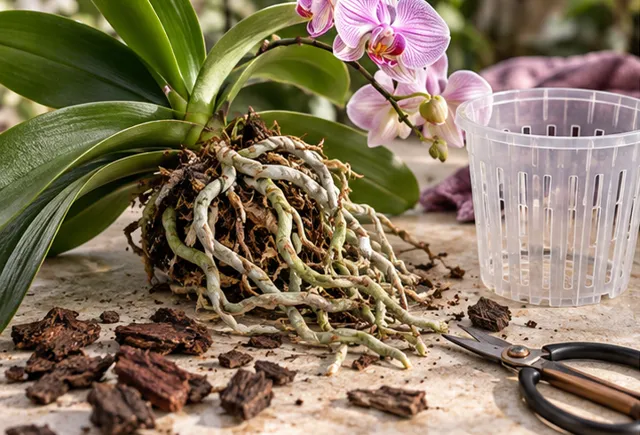
How to Repot an Orchid
Repot with fresh medium, keep healthy roots and leave the crown above the mix.
Read the guide