Orchid leaf growth checker
Measure the last two mature leaves on the same Phalaenopsis, then describe its roots, potting mix and light. The checker shows the percentage difference and practical next checks. Leaf length alone cannot reveal the cause.
Your result
Check next
How to measure the leaves
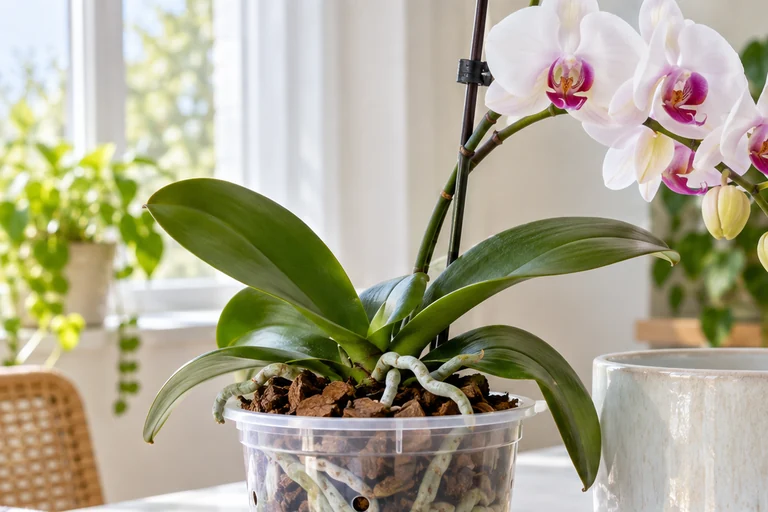
Use the newest leaf that has stopped growing and the mature leaf formed just before it. Measure each from the base to the tip without stretching or cutting it.
If the newest leaf is still folded or lengthening, take a photo and repeat the measurement when its size stops changing.
What to look at besides leaf size
One short leaf is different from several in a row. Also inspect new growth that looks twisted, scarred or speckled: pests may hide in the folds and beneath the leaves.
Soft roots
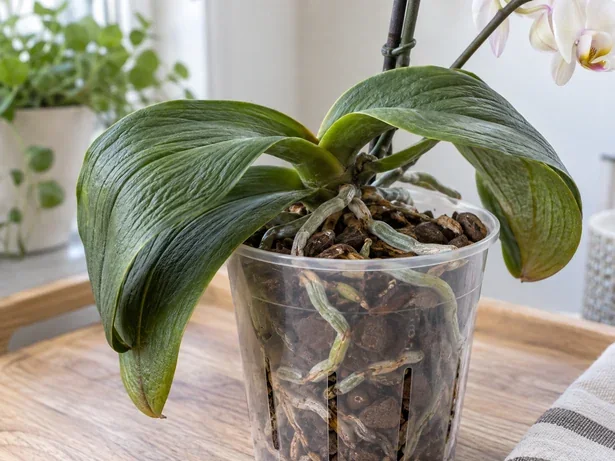
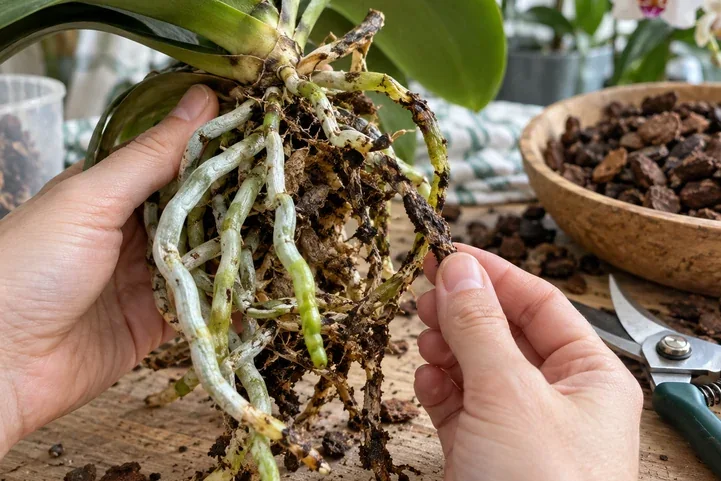
Soft or hollow roots may not take up water well. Look for old, wet bark and poor drainage inside the pot.
Low light
A dim corner can slow new growth. Move the plant gradually toward brighter, filtered daylight.
Recent repotting
Replacing moss with bark can change drying time. Check the new mix before following the old watering schedule.
Firm roots, stable growth
If the plant is otherwise growing well, keep conditions steady and compare the next mature leaf.
Check the roots and bark before adding water
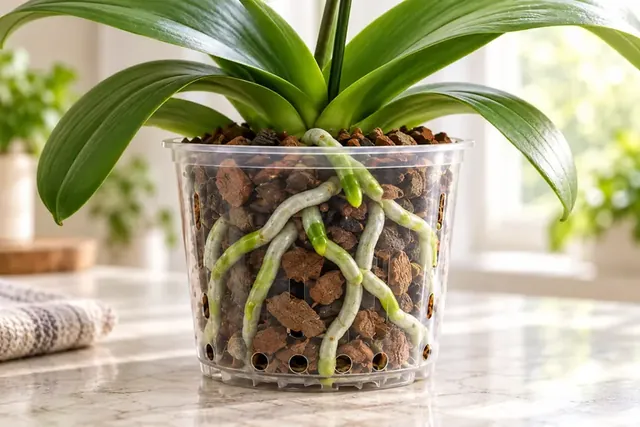
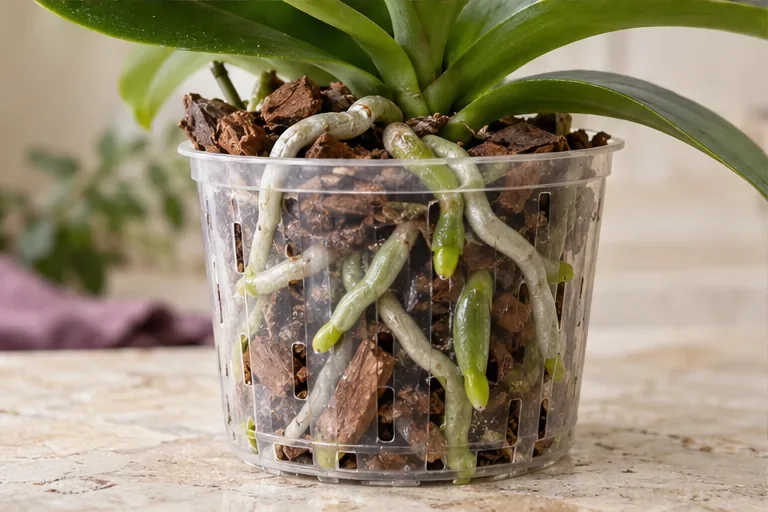
A healthy Phalaenopsis root holds its shape. Roots visible through a clear pot may be silver when dry and green after watering, so do not judge them by color alone. Soft, hollow or collapsing tissue needs a closer look.
Bark that has broken down may stay wet, particularly in the middle of the pot. A sour smell, trapped water or several failing roots give you a reason to inspect. A short leaf by itself is not a reason to repot.
If the leaves also wrinkle while the mix remains wet, examine the roots before watering again. See the root rot guide for signs of damaged tissue.
Changes in light, potting mix and temperature
Light. Even green leaves can grow slowly in a dim room. Move the orchid gradually into brighter, filtered daylight rather than strong direct afternoon sun.
Repotting. Moss and coarse bark hold moisture differently. After a repot, feel the new mix below the surface before deciding when to water.
Heat and drafts. Check whether the orchid sits beside a heater, a cold draft or hot window glass. Correct that exposure before changing fertilizer.
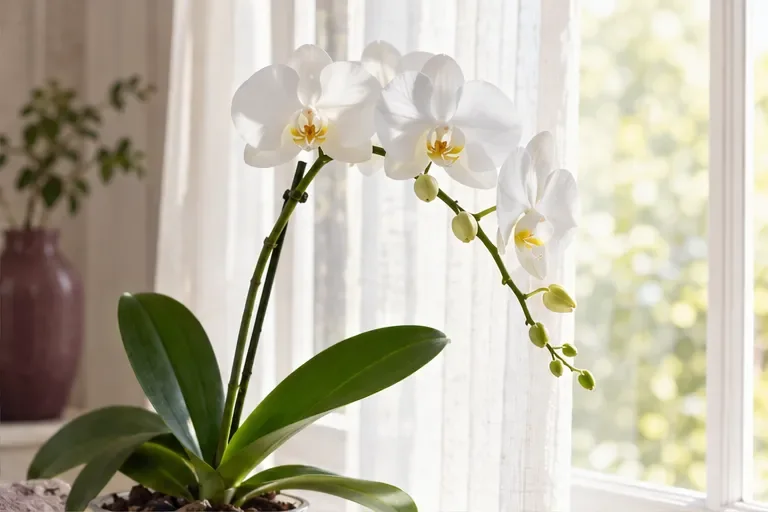
Track the next leaf
A finished leaf will not gain much more length. Use the next leaf and fresh root tips to judge whether a care change has helped.
Act sooner if the crown becomes soft, rot spreads or several leaves collapse.
Common questions
Is a smaller new leaf always a problem?
Not necessarily. A developing leaf has not reached its final size. If several mature leaves become shorter in succession, look at the roots and growing conditions.
Should I repot because a leaf is smaller?
No. Repot if the mix is failing, the roots need attention or the pot no longer fits—not solely because one new leaf is short.
Can a mature small leaf grow larger?
Very little once it finishes expanding. Any improvement in growing conditions is more likely to show in a later leaf.
Do I need more fertilizer?
Not just because the leaf is smaller. Check roots and light first; stronger feeding can add stress without fixing the underlying problem.