
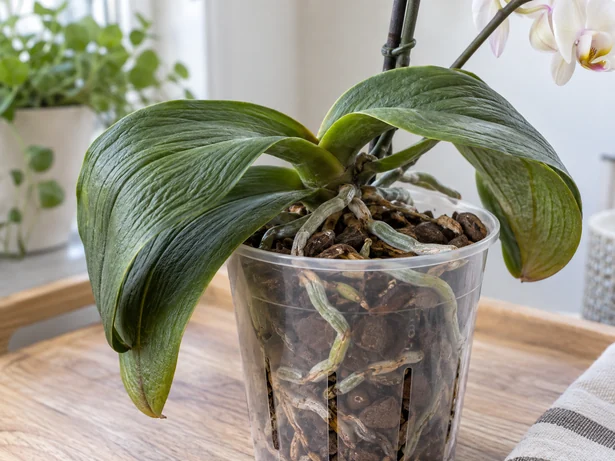
Check the roots first
Remove the inner pot from its cover. Empty standing water. Feel accessible medium below the surface and compare pot weight with a freshly watered, drained pot.
Look at root structure as well as color. Firm roots in a genuinely dry medium point toward insufficient water supply. Soft, hollow or collapsing roots in a wet pot point toward a root problem that extra watering will not solve.
Match the leaf symptom with pot moisture and root condition before you act. Similar-looking leaves can have different causes.
| Root zone | What the leaf symptom suggests | Next action |
|---|---|---|
|
Dry medium, firm roots
|
Water supply may have been inadequate
|
Water thoroughly, drain and review the interval.
|
|
Wet medium, soft roots
|
The plant may be unable to take up enough water
|
Inspect the roots and correct the failing setup.
|
|
Moderate moisture, firm roots, recent heat exposure
|
Water loss or heat stress may exceed supply
|
Remove the immediate heat stress and monitor.
|
|
Recent major repot or root loss
|
Reduced uptake during recovery
|
Stabilize the plant and manage the remaining roots carefully.
|
|
Localized scars, pests or uneven damage
|
Another cause may be involved
|
Inspect the tissue and check for pests before assuming the plant is thirsty.
|
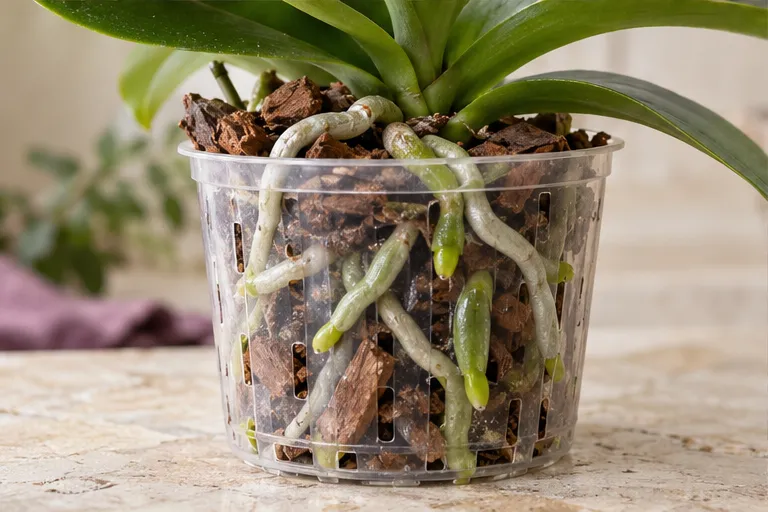
A dry pot with firm roots
Water the mix thoroughly with room-temperature water and let the excess leave. If very dry bark sheds the first pass, pause and water again so the mix actually wets.
Avoid giving small splashes several times a day: the surface may get wet while roots farther down stay dry. Water the mix evenly, let it drain and check how long the whole pot takes to dry.
Warmer weather, heating, fresh bark or a different pot may change how quickly the mix dries. Check the whole pot as described in how to water orchids; a fixed soaking time tells you little about the wet center.
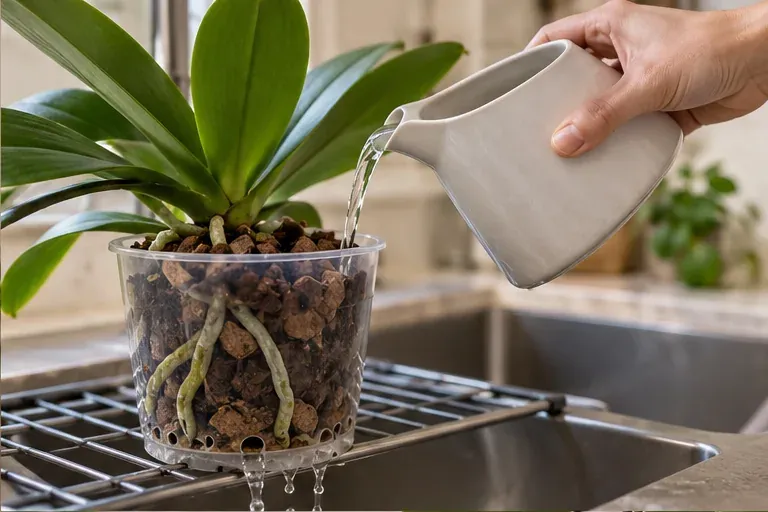
A wet pot with failing roots
If the pot stays wet, inspect it before adding water. Bark may have broken down, a dense plug may be holding moisture around the roots, or the outer pot may be collecting runoff.
If several roots are soft or hollow, follow root-rot recovery. Keep firm roots and choose a pot that fits them, with fresh mix between the roots. Do not move a damaged plant into a much larger container.
A firm root at the edge does not tell you whether roots in the center are healthy. Check moisture and drainage, and note whether the leaves are getting worse.
Heat and drying drafts
A sunny windowsill or heating vent can dry or overheat a plant even when the rest of the room feels comfortable. Move it out of direct heat while keeping it in bright, filtered light.
Check the roots before buying a humidifier. Higher humidity will not repair rotten roots. Measure room humidity first, and avoid leaving the foliage constantly wet.
Some leaves naturally arch, and older leaves can be less firm than new ones. Compare the leaf with its earlier shape; not every healthy orchid leaf stands upright.
After repotting
An orchid that lost roots during repotting may need time to take up water normally again. Keep it steady in the pot so that movement does not damage new root tips.
Check how the new mix dries. Coarse bark may need watering sooner than the old moss, while a denser mix may stay wet longer. Base the next watering on moisture inside the pot.
Avoid responding to every crease with another repot. Repeated disturbance can become part of the problem. Inspect again only when the plant's decline or the condition of the mix gives you a clear reason.
Keep a healthy leaf attached
A green wrinkled leaf may still be useful to the plant. Do not remove it just because it is less attractive. Keep healthy tissue while correcting the cause of stress.
A leaf that is fully dry and loosens naturally is different from one with soft spreading decay. If damage is wet, rapidly expanding or involves the crown, separate the plant and seek a closer assessment. See yellow-leaf and crown checks.
Cutting away all imperfect leaves does not fix the root system and can leave the orchid with less useful tissue.
Signs of improvement
Slightly soft leaves may become firmer again, but deep creases can remain. Look for new root tips and firm new growth instead of expecting every old leaf to become smooth.
Take comparison photographs under similar light every few weeks. Record moisture and watering, and avoid repeatedly bending the leaf to test it.
Inspect the plant promptly if new leaves collapse, the crown softens or decay spreads. Old wrinkles alone are not a reason to keep changing treatment.
Choose the next step
Water when the mix is dry and the roots are firm. Inspect soft roots in a wet pot before watering again. Move the plant away from direct heat, and keep it separate from other orchids if damage is spreading.
The right response depends on what you find inside the pot—not on the wrinkles alone.
Common questions
Will wrinkled orchid leaves become smooth again?
Sometimes mild loss of firmness improves, but old severe wrinkles may remain. Look for firm new leaves and healthy root tips to judge recovery.
Should I soak a wrinkled orchid for several hours?
Do not use a long soak without checking the roots and medium. A wet plant with damaged roots needs a different response from a genuinely dry plant with healthy roots.
Can low humidity alone explain limp leaves?
It can contribute to water loss, but root condition, moisture and heat should be checked first. Increasing humidity does not repair a failing root system.
More Orchid Care Guides
Why Orchid Leaves Turn Yellow
Separate an aging bottom leaf from water, root or light problems. Find out when yellowing needs prompt attention.
Read the guide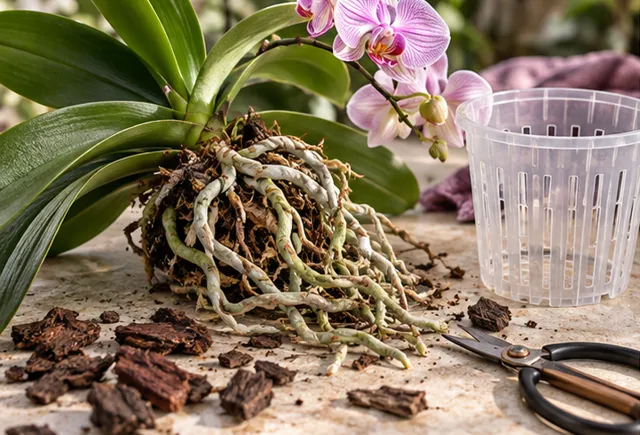
Orchid Root Rot
Inspect soft roots, preserve healthy tissue and repot a struggling orchid without making the damage worse.
Read the guide