
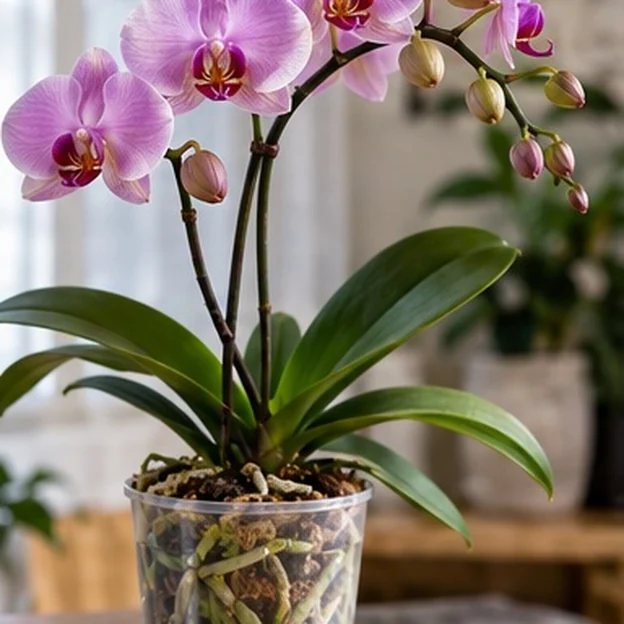
Know the parts of the plant
The crown is the central growing point between the newest leaves. Roots have a rounded growing tip and an absorbent outer covering. Flower spikes are separate stems that eventually develop nodes and buds.
Phalaenopsis does not have the same swollen storage pseudobulbs as a Cattleya or many Oncidiums. Its leaves and roots should not be treated like disposable parts after a display. Healthy aerial roots belong to the plant even when they escape the pot.
A new growth is not ready to prune merely because it looks untidy. Use spike versus root before handling an uncertain structure.
Everyday care at a glance
Check the plant at its actual window position. The same routine may need adjusting when the season or potting mix changes.
| Care factor | Starting point for common indoor hybrids | Check before adjusting |
|---|---|---|
|
Light
|
Bright, filtered window light; often an east-window position
|
Actual exposure at the leaves, including afternoon heat
|
|
Water
|
Thoroughly wet the mix when it approaches dryness, then drain
|
Moisture in the center, pot weight and root firmness
|
|
Temperature
|
About 70–80°F (21–27°C) by day and 60–65°F (16–18°C) at night for common home hybrids
|
The plant's actual window-level minimum and maximum
|
|
Medium
|
Suitable bark, long-fiber sphagnum or an airy blend
|
Pot fit, packing and how quickly the center dries
|
|
Fertilizer
|
A measured light routine during active growth
|
Label rate, water quality and root condition
|
|
After flowering
|
Continue root and leaf care
|
Whether the spike is green, dry or damaged
|
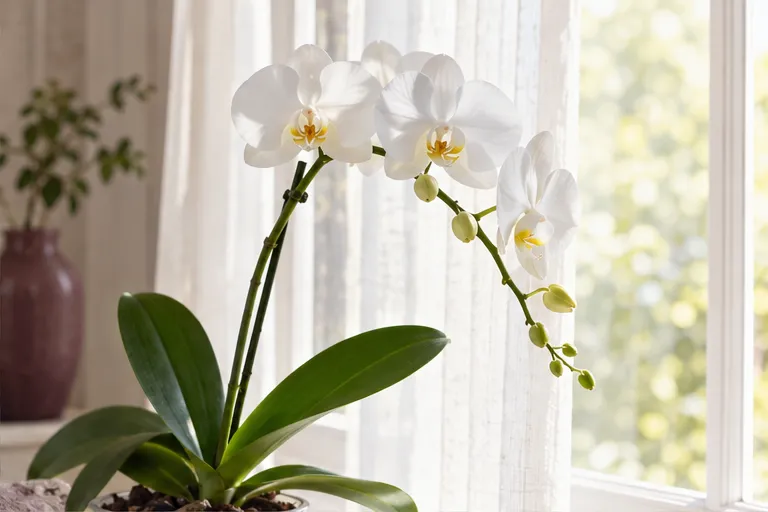
Choose a bright, filtered window
An east-facing window can be convenient. South and west exposures often need filtering, while a shaded north window may be too dim for reliable flowering. Window direction does not override trees, blinds or distance from the glass.
Increase exposure gradually. If the plant has spent time in a dim shop or living room, do not move it directly into a strong sunbeam to make it bloom. Check for heat where the leaves actually sit.
A grow light can support a plant when window light is inadequate. It needs suitable output, placement and a regular dark period—not just a decorative bulb that looks bright to the eye. See orchid light requirements.
Water the mix, not the crown
A Phalaenopsis in loosely packed bark and the same plant in dense moss can require very different checking intervals. Lift the inner pot, inspect moisture below the surface and empty the decorative cover.
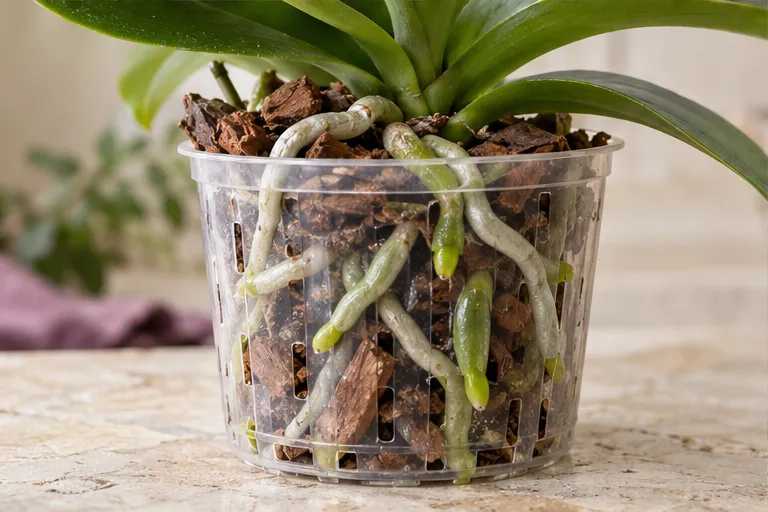
Many roots turn silver as the outer covering dries and greener when wet. But pale roots in the center can still be healthy, and aerial roots dry faster than the mix. Do not base every watering on the color of one exposed root.
Water the mix and keep water out of the crown. Let runoff finish and blot away water caught between leaves. Avoid a permanent reservoir under a normally potted plant.
Humidity and gentle airflow
For common indoor moth orchids, 40–60% relative humidity is a practical home range. Measure beside the leaves before adding a humidifier. Keep the unit clean and avoid mist collecting on the plant or nearby surfaces.
Provide gentle room air movement without pointing a fan at flowers or tender roots. Humidity cannot replace watering or repair damaged roots. Empty runoff and blot away water caught where the leaves meet.
When to repot
Repot when the mix breaks down, the roots are damaged or the pot no longer fits. After flowering is often convenient, especially when new roots are growing. Do not wait for the flowers to finish if the roots are rotting.
Use a container that fits the healthy roots; moving straight to a much larger pot leaves more wet medium around them. Keep the crown above the mix. Handle fresh root tips carefully and leave stiff aerial roots outside when they cannot be positioned gently.
For the full sequence from unpotting through fresh mix and aftercare, see how to repot an orchid.
After the last flower
A completely dry spike can be removed carefully. A healthy green spike may remain, be shortened above a node on a suitable vigorous hybrid, or be removed when the plant needs to focus on recovery. A green spike may branch, but it may also remain unchanged or eventually dry.
Continue appropriate light, watering and feeding while the plant grows. Do not impose a dark dry dormancy. For many common hybrids, a suitable cooler period can help initiate a later spike once the plant is strong; some warmer-growing species have a different response.
Use care after blooming for the immediate decision and reblooming for the longer growing conditions.
Watch leaves and roots
A new leaf, extending root tips and a firm crown are signs of growth between flower displays. A leaf can also retain old damage after conditions improve.
If the plant declines, start with the roots and the mix. Yellow leaves, wrinkled foliage and bud drop have overlapping causes. Use orchid problems for a focused check before changing water or fertilizer.
Keep notes on watering and new growth so you can see what actually changes after an adjustment.
Common questions
Is a mini Phalaenopsis cared for differently?
The basic care is similar, but a small pot may dry at a different rate. Check its mix and roots instead of copying the water volume used for a larger plant.
Do moth orchids need a dry winter rest?
Common indoor Phalaenopsis hybrids should not be forced through a dry, dark rest. Continue condition-based care; identify unusual species before changing seasonal treatment.
How do I know whether my orchid is a Phalaenopsis?
Broad fleshy leaves on a short stem and arching flower spikes are good clues. Keep the label; tall jointed canes or a chain of pseudobulbs suggest another group.
More Orchid Care Guides
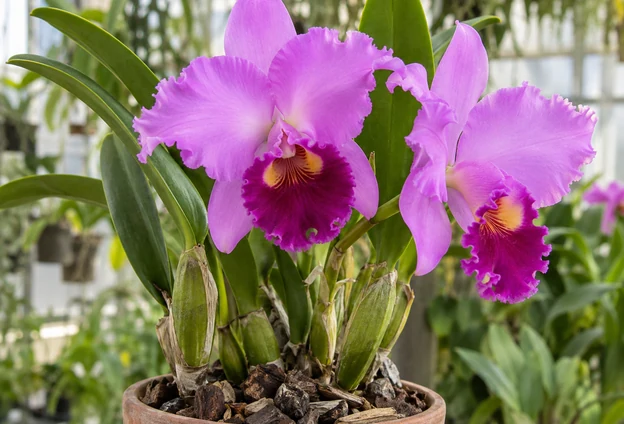
Cattleya Orchid Care
Give Cattleyas suitable light, understand their storage stems and choose the right moment to repot.
Read the guide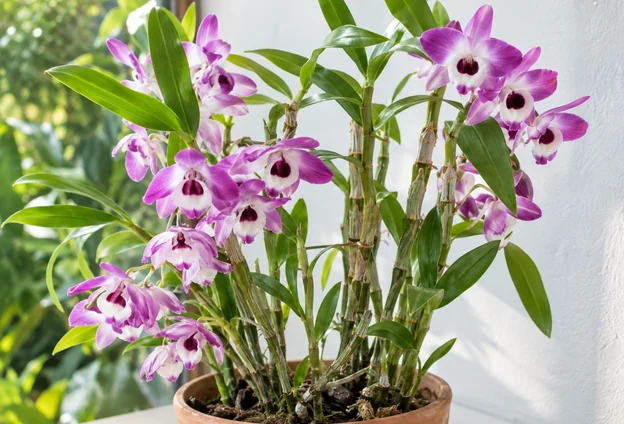
Dendrobium Orchid Care
Distinguish nobile-type and warm-growing Dendrobiums, keep healthy canes and avoid the wrong winter routine.
Read the guide